Also in: Português · Español · Italiano · 中文 · हिन्दी
Main points
- Nausea on Mounjaro tends to get worse when the stomach has been empty for many hours and after large, fatty meals, and it gets better with small plates spread through the day.
- Drink water in sips between meals, even when you don’t feel like it, because the drug also lowers thirst.
- When your appetite disappears, start your plate with protein and pick foods that are easy to eat, such as yogurt, eggs and soup.
- For constipation, raise fiber little by little and with water; for diarrhea, cut back on fat, lactose and the sweeteners sorbitol and xylitol.
- Vomiting that won’t stop, signs of dehydration or a week of eating almost nothing mean you should contact your doctor, who may postpone the next increase.
Nausea on Mounjaro usually shows up in the morning, after many hours without food, or right after a large or fatty meal. Almost everything that relieves it comes down to how you eat: small plates, no skipped meals, less fat and water taken between one meal and the next. With diarrhea, constipation and vomiting the adjustments change a little, and in some situations it makes sense to ask your doctor to hold off on the next dose increase.
In the post on the side effects of Mounjaro I covered how often nausea happens and in which weeks it tends to come (more in the weeks when the dose goes up, with improvement once it stops going up), and here I stick to the practical side. During 2025, dietitians, doctors and patient representatives from three European organizations (the association for the study of obesity, the federation of dietitians and the coalition of people living with obesity) reviewed what is known about food and weight-loss injections and put together a table of what to do for each symptom. The consensus came out in July 2026 in The Lancet Diabetes & Endocrinology (several authors report payments from Novo Nordisk and Eli Lilly for lectures and consulting), and that table is the basis of this post.
What to do when Mounjaro makes you nauseous
To ease nausea on Mounjaro, have three to six small meals a day, as the 2026 European consensus advises, without skipping any; eat slowly and stop when you feel satisfied. Cut down on fried food, fatty sauces and very sugary sweets, choose cold or room-temperature food with a mild smell, and save water for between meals, in sips. Soda and sparkling water tend to make bloating and burping worse, and ginger or mint tea helps some people. If the nausea still keeps you from eating and drinking the minimum, your doctor can hold off on the next dose increase, go back to the previous dose or prescribe an anti-nausea medicine for a few days.
A full plate and an empty stomach both make nausea worse
Tirzepatide, the active ingredient in Mounjaro, mimics two hormones the gut releases after meals, GLP-1 and GIP. With it, the brain gets the signal that you are satisfied with less food, and the stomach holds on to what came in for longer before passing it along. The European consensus puts most of the nausea, burping and feeling of a full stomach down to this pair of effects (stronger satiety and slow emptying). A large plate sits longer in a stomach that already works slowly, and vomiting shows up more often after large meals.
An empty stomach for many hours also makes nausea worse. The paper by four American nutrition and obesity societies, published in 2025 in the American Journal of Clinical Nutrition (with public funding from the US National Institutes of Health), describes a cycle some people fall into: you feel nauseous, stop eating, the nausea gets worse on an empty stomach and you eat even less. To break that cycle, the authors suggest a small breakfast and then small meals every 3 or 4 hours, with water throughout the day.
How to plan meals on nausea days
So you don’t fill a stomach that is already slow all at once, use a smaller plate, eat slowly, chew well and stop at the first sign that you are satisfied, without waiting to feel full. In the first days on the injection, the American societies’ paper also suggests avoiding very fatty and very high-fiber food, which sit heavier in the stomach, and I would repeat that precaution in the days after each dose increase, when nausea tends to come back.
Plain, dry food that is cold or at room temperature usually goes down better because it gives off less smell: toast, saltine crackers, chilled fruit, yogurt, rice with shredded chicken. The consensus table suggests eating something plain as soon as you wake up, staying away from kitchen smells when the nausea is bad and opening a window or taking a short walk outside before eating. Foods with ginger are on the same list, and the American paper also mentions ginger or mint tea and acupressure wristbands.
Fried food, chips, fatty meats, processed meats, hard yellow cheeses and cream sauces stay longer in the stomach and tend to make nausea worse, and the European table adds very sugary food to the list. The American societies’ paper notes that nausea itself sometimes brings cravings for white bread, crackers and sweets. These foods satisfy the craving, but they bring little protein and little fiber at a time when you are already eating little.
Writing down for a while what you ate and how you felt afterward helps you find your own trigger, which varies from person to person. The table sums up, symptom by symptom, the measures in the European consensus, with a few items from the American paper.
| Symptom | What usually helps | What usually makes it worse |
|---|---|---|
| Nausea | Small plates every few hours, something plain when you wake up, cold or room-temperature food, ginger | Empty stomach for many hours, strong smells, fried food, very sugary food |
| Vomiting | Small, frequent sips, oral rehydration solution, going back to food gradually | Large meals, drinking a lot at once |
| Constipation | Fiber raised gradually, water, kiwi, prunes, a hot drink in the morning, walking | Little water, little fiber, staying inactive |
| Diarrhea | Small meals, oats and fruit, water and rehydration solution | Fat, milk (if it makes things worse), sorbitol and xylitol, coffee, alcohol |
| Heartburn and burping | Eating slowly, chewing well | Soda, chewing gum, chili pepper, coffee, alcohol, fat |
| Feeling full early | Protein first, soft food, liquids between meals | Drinking with food, skipping meals |
A sample day of eating on nausea days
Putting the tips above together, a day of eating on nausea days might look something like this. Use it as a guide; the amounts and swaps depend on your body, your health conditions and what your stomach accepts, and a dietitian can adjust it for you.
- on waking: a piece of toast or a saltine cracker before anything else, then plain yogurt with chopped fruit;
- mid-morning: chilled fruit or a fruit smoothie made with milk, sipped slowly;
- at lunch, on a smaller plate: shredded chicken, fish or eggs first, then rice and cooked vegetables, with little oil and nothing fried, and water only at the end;
- mid-afternoon: yogurt or cottage cheese with oats, or a ginger tea if the nausea gets worse;
- at dinner: soup with shredded chicken or lentils, or an omelet, with no cream sauce.
Between meals, drink water in sips. If you get constipated, swap white rice for brown rice and add beans gradually; if diarrhea shows up, drop milk if it makes things worse and stick with oats and fruit.
How much water to drink when nausea gets in the way
The European consensus recommends, for most adults, 2 to 2.5 liters a day of calorie-free drinks, with water as the main one: about 2 liters for women and 2.5 for men, a bit more in hot weather and on days of hard training. People with heart failure or chronic kidney disease may have a fluid limit, and in that case the doctor sets the amount.
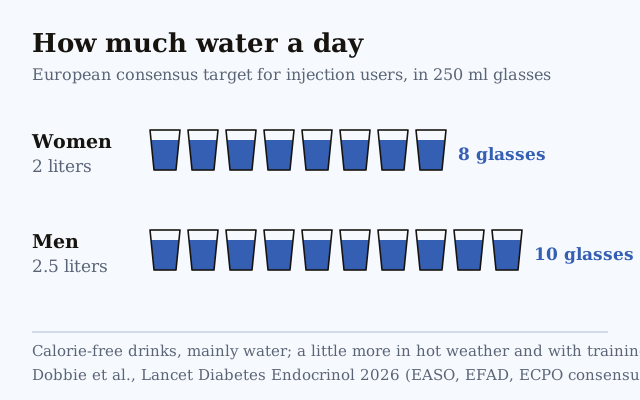
Hitting that target with nausea is hard, and the drug makes it a little harder, because injections in this family lower thirst along with hunger. It helps to drink without waiting to feel thirsty, with a bottle in sight, sips throughout the day and most of the water outside mealtimes, since liquid taken with food fills a stomach that already empties slowly. Too much coffee and alcohol make the body lose more water through urine. With vomiting or diarrhea, the oral rehydration solution sold at pharmacies replaces the water and the salts lost along with it.
Protein when your appetite disappears
With little appetite, the plate shrinks, and protein is often the first thing left uneaten. It protects muscle during weight loss, which is why the European authors suggest starting your plate with protein when you get full early. Soft, low-volume options go down better: omelets, scrambled eggs, plain or Greek yogurt, cottage cheese, fish, soup with shredded chicken or lentils, and fruit smoothies with milk or yogurt. According to the American societies’ paper, these options tend to be more appealing than red meat, cold cuts and hard cheeses on those days.
When even that doesn’t get you to the amount you need, a protein shake, such as whey protein, can fill the gap, ideally with help from a dietitian to work out the amount. Because hunger stops reminding you, some people need a phone alarm to remember to eat. I explained how much protein to eat and why strength training makes a difference when I wrote about losing weight without losing muscle mass.
If someone spends a week or more eating fewer than 800 calories a day, or cannot cover what they need even with help, the consensus advises the care team to talk with them about lowering the dose, taking a break or, in severe cases, stopping the injection. The authors base this limit on the risk of malnutrition and of disordered eating.
Constipation: add fiber slowly, with water
The gut slows down on the injection, and people who eat little also eat less fiber and drink less water. The consensus recommends at least 25 grams of fiber a day and admits this target is hard to reach when someone eats fewer than 1,500 calories, because fiber goes up and down with the amount of food.
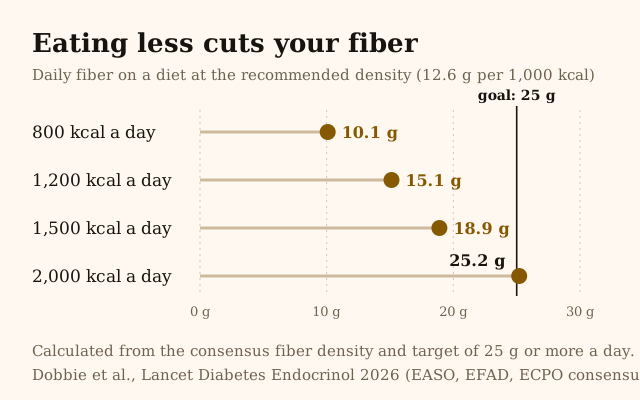
Even with a good diet, someone on 1,200 calories a day falls well short of 25 grams. That’s why fiber needs to go up gradually and always with water: beans, lentils, chickpeas, oats, leafy greens, vegetables, whole-grain bread and brown rice, and fruit with the skin on. If it makes bloating or nausea worse, go slower, since too much fiber weighs on a slow stomach. Kiwi and prunes have studies in their favor for constipation. A hot drink or a warm bowl of oatmeal in the morning helps wake up the gut, and so does walking.
If none of this works, the consensus mentions a fiber supplement (psyllium, for example), increased slowly and with water, and the doctor may recommend other medicines for the gut. It is also worth reviewing the medicines you already take, because some cause constipation, including certain anti-nausea medicines. The American paper notes that constipation lasting many days can even end in diarrhea, and severe pain with a swollen belly needs to be checked.
What to eat when you have diarrhea
With diarrhea, fat gets in the way again, and the European table suggests small, low-fat meals. If milk and dairy make it worse, cut back on lactose for a while. The sweeteners sorbitol and xylitol, common in candy, chewing gum and some diet products, loosen the bowels, and so do coffee and alcohol. Foods that cause a lot of gas, like cabbage and soda, can be left out until the gut settles down.
Soluble fiber, from oats and fruit, helps firm up stools. Water is still important, and rehydration solution comes in if the diarrhea is severe. Diarrhea with blood or fever needs care the same day, and diarrhea that doesn’t improve in a few days needs an appointment, because it may not be just a side effect of the drug.
Heartburn, burping and bloating
Heartburn, burping and bloating come from the same slow stomach. Eating slowly and chewing well reduce the air you swallow. Soda, sparkling water and chewing gum increase burping and bloating, and chili pepper, coffee, alcohol and fatty food make heartburn worse. According to the American societies’ paper, alcohol can worsen nausea and reflux in people on injections in this family.
When nausea turns into vomiting
After vomiting, start drinking again in small, frequent sips, of water or rehydration solution, and only then try to eat, starting with plain foods. A whole glass at once tends to come back up.
Vomiting that won’t stop, or that won’t let you keep even water down, needs care the same day. Without enough water the kidneys suffer, and the tirzepatide prescribing information notes that most cases of kidney injury came after vomiting or diarrhea, one of the rare risks of the injection I went over in the other post. The consensus adds an even rarer risk: the body’s store of vitamin B1 lasts 1 to 3 weeks, and vomiting for more than a week can use it up. There have been reports of a serious neurological disease caused by a lack of it in people on these injections, and in someone who has been vomiting for days the doctor may replace the vitamin.
If you take a birth control pill, the same prescribing information advises switching to a non-oral method or adding condoms in the weeks after starting and after each dose increase. Severe vomiting or diarrhea can also take away the pill’s protection, and the contraception guide from the CDC, the US health agency, bases what to do on those days on the same rule used for a missed pill. People with diabetes who use insulin or a sulfonylurea are at risk of low blood sugar when they eat very little, and need to agree with their doctor on what to do on days when they can’t eat. And if you are making yourself vomit, or if fear of eating is taking over, tell your doctor, because the consensus calls for attention to eating disorders in people on the injection.
When to hold off on the dose increase
With nausea or another strong side effect, the European consensus advises the care team to postpone the next increase, go back to the last dose the person tolerated well, take a break or, if needed, stop. Spacing the increases further apart helps tolerance, and some people only do well on lower doses. The American paper reports that in the studies that led to the injections’ approval, people with nausea could stay longer on the same dose until the discomfort passed.
Many people worry that holding the dose will slow down their weight loss. A Danish online program with semaglutide (the drug in Ozempic and Wegovy), published in 2025 in Diabetes, Obesity and Metabolism, only raised the dose when the person stopped losing weight well or got hungry again. Those who stayed in the program until week 64 had lost, on average, 16.7% of their weight, a result the authors themselves consider similar to that of the large trials, with average doses below the maximum. It was an observational study, with a different drug and with many people dropping out along the way, so it counts as a hint.
In a review published in 2026 in the same journal, Brazilian researchers pooled 16 studies in which the injections came with diet and exercise guidance: nausea, diarrhea and constipation showed up anyway, more at high doses. None of these studies compared one eating strategy with another to see which caused less nausea, and the measures in this post come from expert consensus and from how the drug works. They can bring relief, and when the nausea is severe you and your doctor need to talk about the dose. The doctor who follows you makes that call, and you shouldn’t change or skip a dose on your own. If you are thinking of quitting treatment, what happens to your weight afterward is in the post on stopping weight-loss injections.
When nausea needs medical care
Nausea, diarrhea and constipation that respond to these adjustments can be discussed at your next scheduled appointment. Some signs, though, need care without waiting for the appointment, within different time frames:
- at the emergency room, right away: severe, constant pain in the upper belly that may spread to the back (it may be pancreatitis, and you should not take the next dose); a very swollen, hard belly with cramping pain, without passing stool or gas; confusion, double vision or loss of balance after days of vomiting;
- the same day: vomiting that won’t stop or that won’t let you keep even water down; little, dark urine, a very dry mouth or dizziness when standing up; diarrhea with blood or fever;
- within a few days: diarrhea that doesn’t improve; a week or more of eating almost nothing, or fast weight loss with weakness.
The other Mounjaro warning signs, such as those of the gallbladder and of allergy, are in the table I put together in the post on side effects. What the injections are and who shouldn’t use them is in the general post on weight-loss injections.
In practice
- Have three to six small meals a day, with something plain right after you wake up, and don’t go many hours on an empty stomach.
- Eat slowly, on a smaller plate, start with protein and stop at the first sign of feeling satisfied.
- Cut out fried food, fatty sauces and very sugary sweets, especially in the days after each dose increase.
- Drink 2 to 2.5 liters a day, in sips between meals, even if you’re not thirsty, and set soda and sparkling water aside.
- Raise fiber gradually and with water if you get constipated; with diarrhea, drop fat, sorbitol, xylitol and, if it makes things worse, lactose.
- Call your doctor if the vomiting won’t stop, if you are getting dehydrated or if a week goes by with you eating almost nothing, and don’t change the dose on your own.
Conclusion
Nausea on Mounjaro usually eases once the dose stops going up, and until then small, frequent plates, less fat, water between meals and protein first help during those weeks; constipation and diarrhea have their own adjustments for fiber, fat and sweeteners. These measures come from expert consensus, and no study has yet compared one with another. When the dose goes up faster than your body can keep pace with, you can wait longer before the next step, and a Danish program with semaglutide that only raised the dose when needed suggests this doesn’t have to cost you the result. Vomiting that won’t stop and days of being unable to eat need medical care.
All the best!
G
Responsible physician: Dr. Gilberto Nering Junior, sports medicine physician, CRM-SP 160822, RQE 142486 (Sports Medicine, Brazil).
This text was not sponsored, is for information only and does not replace an individual assessment. Questions about the content: contact the clinic.
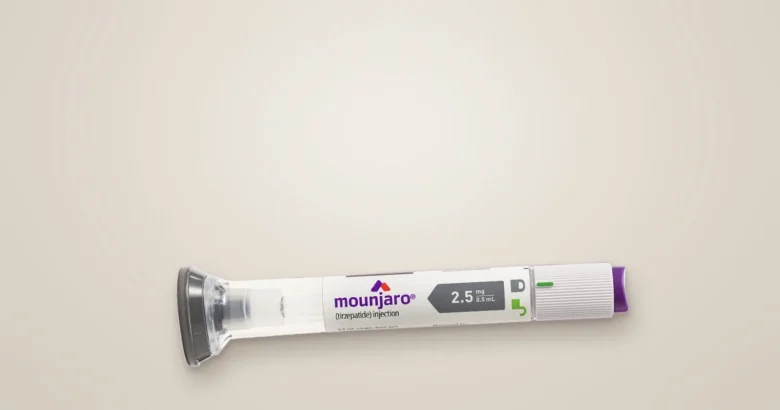
Cover photo: Mounjaro pen, Eli Lilly press image, cropped and placed on a studio background.
Frequently asked questions about nausea on Mounjaro
How can I ease nausea on Mounjaro?
Have small meals every few hours, without skipping any, eat slowly and stop when you feel satisfied. Avoid fried food and very sugary sweets, choose cold or room-temperature food and drink water in sips between meals. If the nausea keeps you from eating and drinking, talk to your doctor, who may wait longer before raising the dose.
What should I do when Mounjaro nausea is constant?
All-day nausea tends to get worse on an empty stomach, so don’t skip meals: eat something plain when you wake up and small plates every 3 or 4 hours, with water in sips in between. If you still can’t eat and drink the minimum, talk to your doctor, who can hold off on the next dose increase, go back to the previous dose or prescribe an anti-nausea medicine for a few days.
Is nausea on the first day of Mounjaro normal?
It can happen, because stomach side effects are more common at the start of treatment and in the days after each dose increase. In the first days, small meals without much fat help. If you vomit nonstop or can’t keep even water down, get care the same day.
What should I do when Mounjaro causes nausea and diarrhea?
Have small, low-fat meals, drink water and, if the diarrhea is severe, use oral rehydration solution. Avoid coffee, alcohol and the sweeteners sorbitol and xylitol, found in sugar-free candy and gum. Diarrhea with blood or fever needs care the same day, and diarrhea that doesn’t improve in a few days needs an appointment.
What should I do when Mounjaro causes nausea and vomiting?
After vomiting, start drinking again in small, frequent sips of water or oral rehydration solution, and only then try to eat, starting with plain foods. Vomiting that won’t stop, or that won’t let you keep even water down, needs care the same day, because dehydration can harm the kidneys. If you need an anti-nausea medicine, your doctor should choose it, because some cause constipation.
References
- Curtis KM, Nguyen AT, Tepper NK, et al. U.S. Selected Practice Recommendations for Contraceptive Use, 2024. MMWR Recomm Rep. 2024;73(3):1-77. doi:10.15585/mmwr.rr7303a1
- de Paulo RS, Bonifácio DB, de Carvalho MHL, et al. Dietary strategies and nutritional management in patients receiving GLP-1 and dual GIP/GLP-1 receptor agonists as adjuncts to lifestyle interventions: a systematic review of randomised clinical trials. Diabetes Obes Metab. 2026;28(7):5492-5507. doi:10.1111/dom.70779
- Dobbie LJ, Tolvanen L, Alves D, et al. Nutritional, functional, and psychological considerations for incretin-based therapies in adults: an EASO, EFAD, and ECPO Consensus Statement. Lancet Diabetes Endocrinol. 2026;14(9):754-777. doi:10.1016/S2213-8587(26)00122-1
- Eli Lilly and Company. Zepbound (tirzepatide) injection: prescribing information. Indianapolis: Eli Lilly; 2026. DailyMed
- Mozaffarian D, Agarwal M, Aggarwal M, et al. Nutritional priorities to support GLP-1 therapy for obesity: a joint Advisory from the American College of Lifestyle Medicine, the American Society for Nutrition, the Obesity Medicine Association, and The Obesity Society. Am J Clin Nutr. 2025;122(1):344-367. doi:10.1016/j.ajcnut.2025.04.023
- Seier S, Stamp-Larsen K, Jensen SBK, et al. Treat to target in weight management with semaglutide: real-world evidence from an eHealth clinic. Diabetes Obes Metab. 2025;27(12):6979-6987. doi:10.1111/dom.70096