Also in: Português · Español · Italiano · 中文 · हिन्दी
Main points
- Whey is the protein from milk whey. It is digested fast and is rich in leucine, the amino acid that switches on protein synthesis in muscle (Phillips, 2016).
- Combined with strength training, it helps you gain a little more lean mass and strength. The gain is modest and shrinks with age (Li and Liu, 2019; Morton et al., 2018).
- What matters most is total protein for the day: 1.4 to 2.0 g per kilo, and above about 1.6 g per kilo the gain in lean mass stopped growing (Jäger et al., 2017; Morton et al., 2018).
- In healthy people who train, diets with 3.0 to 4.4 g of protein per kilo did not worsen kidney or liver tests. People with chronic kidney disease follow a different rule (Smoliga et al., 2023; KDIGO, 2024).
Whey protein is the protein from milk whey, the liquid left over when cheese is made, filtered and dried into a powder. It is a practical way to hit your daily protein target, and it stimulates muscle as much as or more than other good-quality proteins. The effect shows up alongside strength training, and the extra gain is smaller than the advertising suggests.
Types of whey, digestion and absorption
All whey comes from milk whey, and what changes from one type to another is how much it was filtered. Concentrate goes through fewer steps and keeps more lactose and fat. Isolate is filtered until almost only protein is left, which is why people with lactose intolerance usually tolerate it (Hoffman and Falvo, 2004). Hydrolysate is concentrate or isolate that has already been broken into smaller pieces, as if it were half digested. Native whey is taken straight from milk by microfiltration, without going through cheesemaking or the heating that comes with it (Kim et al., 2023).
| Type | Protein | Lactose | Fat | Absorption speed |
|---|---|---|---|---|
| Concentrate | 25 to 89% | 10 to 55% | 2 to 10% | Fast |
| Isolate | 90% or more | About 0.5% | About 0.5% | Fast |
| Hydrolysate | Depends on the source whey | Depends on the source whey | Depends on the source whey | Similar to intact whey |
| Native | No data in the sources | No data in the sources | No data in the sources | Fast, with a higher leucine peak than concentrate |
Sources: concentrate and isolate composition, Hoffman and Falvo (2004); absorption, Boirie et al. (1997), Calbet and Holst (2004) and Hamarsland et al. (2019). The label states how much protein comes in each serving, and that is the number worth comparing between brands.
Digestion time
Digestion starts in the stomach. In one study, 6 men received 600 mL of solutions with the same amount of nitrogen through a tube placed straight into the stomach. Half of the contents left the stomach in about 20 minutes, with no difference between whey, casein and their hydrolyzed versions. The difference appeared later, in the intestine, where intact casein was absorbed more slowly than the other three (Calbet and Holst, 2004).
| Solution | Time for half to leave the stomach |
|---|---|
| Intact whey | 19.4 minutes |
| Hydrolyzed whey | 21.4 minutes |
| Intact casein | 18.0 minutes |
| Hydrolyzed casein | 19.3 minutes |
Source: Calbet and Holst (2004).
When the protein is taken by mouth and in a larger dose, casein falls behind. In a study of 35 volunteers, one hour after drinking the high dose of beta-lactoglobulin, the main protein in whey, 71% of the liquid had already passed through the jejunum, the part of the intestine just after the duodenum. With the high dose of casein, it was only 38% (Mahé et al., 1996).
Absorption time
Whey is called a fast protein because it is soluble and moves quickly through the stomach. Taken by mouth, casein, the other milk protein, curdles in the stomach and empties more slowly (Boirie et al., 1997; Mahé et al., 1996). In the classic study that labeled both proteins, amino acids started to appear in the blood in about 20 minutes. With whey, leucine entry into the blood peaked at around 80 minutes. The wave lasted 4 to 5 hours and returned to normal in about 6 hours. With casein, the rise was smaller and held at a plateau for 6 to 7 hours (Boirie et al., 1997).
In the same study, whey stimulated protein synthesis after the meal more (68% versus 31% for casein). Casein, on the other hand, held back protein breakdown better, and over 7 hours the net balance was more positive with it (Boirie et al., 1997). That is why casein, at 30 to 40 g, shows up as an option before bed (Jäger et al., 2017).
Between the types of whey, there is little direct comparison of speed. None of the studies in this review compared absorption of concentrate and isolate in people. In the tube study, hydrolyzed whey left the stomach and was absorbed at the same pace as intact whey (Calbet and Holst, 2004). With casein, the hydrolyzed version entered the blood 27% faster than the intact one, in a study of older adults (Koopman et al., 2009). In rats, hydrolyzed whey stimulated muscle protein synthesis more than intact whey, mainly at a low dose (Nakayama et al., 2019).
Native whey raised blood leucine more than concentrate in a study of older adults, but muscle protein synthesis after training was similar between the two (Hamarsland et al., 2019). In rats, native whey gave more strength and more muscle protein synthesis than regular whey (Kim et al., 2023). In the 2026 network meta-analysis, it came out at the top of the ranking, but without a statistically significant effect, which only regular whey had (Bischof et al., 2026).
When choosing, what counts is tolerance and price. If lactose does not agree with you, isolate is the better pick. If you tolerate lactose, concentrate is fine and usually cheaper. Hydrolysate and native whey tend to cost more, and their advantage has not yet been shown in muscle gain in people.
How whey works in muscle
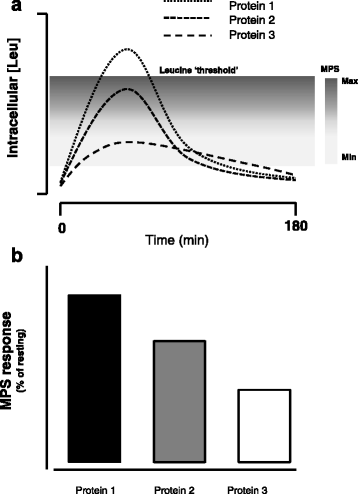
Muscle grows when protein synthesis outpaces breakdown. That depends on two stimuli added together, strength training and the arrival of amino acids in the blood after a meal (Phillips, 2014). The main trigger is leucine. It binds to a protein called Sestrin2, which releases the mTORC1 pathway and gets protein synthesis running (Phillips, 2016).
A protein that is digested quickly and has plenty of leucine makes leucine rise high and fast inside the muscle, crosses a threshold and produces a bigger response. A slow or leucine-poor protein rises only a little and stays below it (Phillips, 2016). In older adults that threshold is higher, and they need more protein per meal for the same response (Phillips, 2016).
Whey compared with other proteins
Whey is a fast, leucine-rich protein. In a study of young men, six per group, each drank a beverage with the same amount of essential amino acids (10 g) from hydrolyzed whey, casein or soy. At rest, muscle protein synthesis with whey was about 93% higher than with casein and 18% higher than with soy, the latter at the edge of statistical significance. After leg training, it was 122% higher than with casein and 31% higher than with soy (Tang et al., 2009).
A 2026 network meta-analysis pooled 51 studies that measured muscle protein synthesis right after training. Native whey, pea, whole egg, mycoprotein and whey ranked in similar positions, but only whey had a statistically significant effect. The largest responses came with doses of 18 to 25 g (Bischof et al., 2026).
In older adults, the test lasted 8 days with extra protein. Men with an average age of 72 received an extra 50 g per day on top of the daily recommendation, in two doses of 25 g. With whey and with pea protein, daily muscle protein synthesis went up. With collagen, it did not change (McKendry et al., 2024). In young people, a study in Londrina, Brazil, compared whey and collagen with leucine matched, and whey increased muscle thickness more than collagen over 10 weeks of training, with no difference in strength (Jacinto et al., 2022).
What the studies show for lean mass and strength
A meta-analysis of 21 clinical trials, with 837 participants and about 13 weeks of strength training, compared whey with placebo. In healthy people, whey gave 0.46 kg more lean mass, 0.62 kg less fat and a little more strength. In people with an illness, there was no difference. Under age 40, the fat loss and strength gain were significant, and the lean mass gain got smaller the older the person was (Li and Liu, 2019).
The broadest analysis of protein supplements in general, with 49 studies and 1,863 people, found numbers of the same order: 0.30 kg more lean mass and 2.49 kg more on the maximum-load strength test. The effect was bigger in people who already trained and smaller with age (Morton et al., 2018).
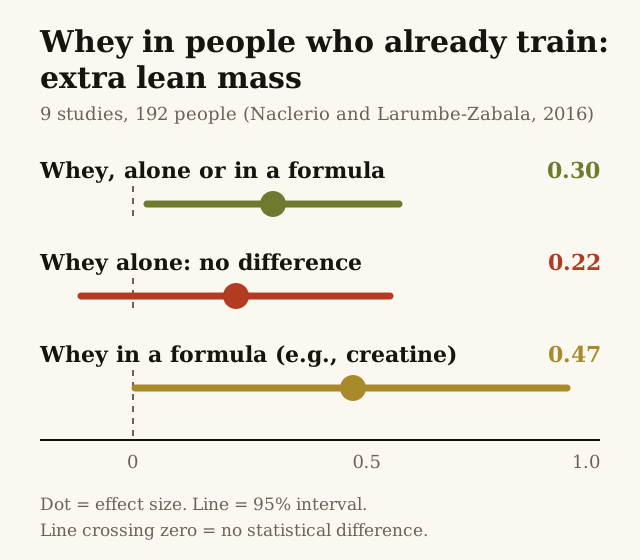
Looking only at people who already train, whey alone did not stand out. A meta-analysis of 9 studies and 192 trained people found a small effect of whey on lean mass when whey alone and whey in formulas with other ingredients were counted together. Split apart, whey alone showed no statistical difference, and the formulas had a bigger effect, especially those with creatine (Naclerio and Larumbe-Zabala, 2016). Creatine, by the way, has a post of its own here on the blog.
A pilot study, with 4 people on whey isolate and 4 on placebo, saw an increase in the thickness of a thigh muscle with whey over 12 weeks and no difference in strength (Duarte et al., 2020). With 8 participants, it is a lead that still needs a larger study.
Adding the studies up, whey adds a few hundred grams of lean mass over three months of training, a real but small gain next to what the training itself and the total protein in your diet do. If you want to know whether you are actually gaining muscle, bioimpedance measures lean mass instead of leaving it to guesswork.
How much whey to take per day and per dose
The math starts with total protein for the day, counting food and supplements. For people who train, the position of the International Society of Sports Nutrition is 1.4 to 2.0 g per kilo of body weight per day, and 2.3 to 3.1 g per kilo during a diet to lose fat without losing muscle (Jäger et al., 2017). In the meta-analysis of 49 studies, going beyond about 1.6 g per kilo per day brought no further gain in lean mass (Morton et al., 2018).
Per meal, the recommendation is 0.25 g per kilo of a good-quality protein, or 20 to 40 g, with 700 to 3,000 mg of leucine, repeated every 3 to 4 hours (Jäger et al., 2017). The network meta-analysis found the best responses between 18 and 25 g per dose (Bischof et al., 2026). A 70 kg person lands between 98 and 140 g of protein per day, and one scoop of whey covers one of those meals.
Dose summary
| Situation | Amount | Example for 70 kg | Source |
|---|---|---|---|
| Daily protein, people who train | 1.4 to 2.0 g/kg | 98 to 140 g | Jäger et al., 2017 |
| Daily protein on a diet to lose fat | 2.3 to 3.1 g/kg | 161 to 217 g | Jäger et al., 2017 |
| Point where the lean mass gain stopped growing | About 1.6 g/kg | About 112 g | Morton et al., 2018 |
| Per meal | 0.25 g/kg or 20 to 40 g | About 18 g | Jäger et al., 2017 |
| Dose with the largest response right after training | 18 to 25 g | 18 to 25 g | Bischof et al., 2026 |
| Chronic kidney disease, stages 3 to 5 | 0.8 g/kg | 56 g | KDIGO, 2024 |
Timing matters less than it seems. The effect of training on muscle lasts at least 24 hours, and when you take it is more about tolerance and routine than about a window (Jäger et al., 2017). If your food already covers your protein, whey is optional. The same position statement points out that the target can be reached with food alone, and that the supplement is a practical way to get there (Jäger et al., 2017).
Is whey bad for you? Kidneys, liver and skin
In healthy people who train, studies that gave diets with 3.0 to 4.4 g of protein per kilo per day, for 8 weeks to 1 year, saw no worsening in kidney or liver tests (Smoliga et al., 2023). Population studies, on the other hand, linked diets with 1.0 to 1.7 g per kilo to worse kidney function in the general population, and this kind of study has not yet been done in people who do strength training (Smoliga et al., 2023).
People who already have chronic kidney disease are in a different situation. The 2024 KDIGO guideline suggests 0.8 g of protein per kilo per day in stages 3 to 5 and advises avoiding more than 1.3 g per kilo in those at risk of the disease progressing (KDIGO, 2024). In that case, whey only with medical follow-up.
A 2021 systematic review pooled 11 papers on harmful effects of whey. Most linked the problem to chronic, excessive use, with the kidneys and liver as the most affected organs, and the picture was worse when the person did not exercise. Acne, changes in gut flora and more aggression also came up (Vasconcelos et al., 2021).
Much of the warning about the liver comes from rats, and the results point in different directions. In sedentary rats on a diet in which whey made up a quarter of their feed for 4 weeks, there was inflammation and liver damage (Gürgen et al., 2015). In another study, in rats on a high-fat, high-fructose diet, whey reduced liver damage, but it increased damage in rats on normal feed (Yiğit Ziolkowski et al., 2024). These doses and conditions are far from someone who takes one scoop a day and trains.
Acne is the most concrete effect in people. There is a case series of 5 men not using anabolic steroids who developed new acne after about 6 months of taking whey every day, and another series of 5 teenagers. Reports of heart attacks in whey users also exist, but it cannot be said that whey was the cause (Smoliga et al., 2023).
What comes in the tub
Researchers at UFRGS, a Brazilian university, analyzed 21 commercially sold whey supplements and found diuretics in 9 of them, with furosemide and hydrochlorothiazide among the most common (Franskoviaki et al., 2026). Diuretics are on the World Anti-Doping Agency’s list of substances prohibited at all times (WADA, 2026), so for an athlete who gets tested, that alone is enough for a positive result. Another known problem is fraud with cheap protein, maltodextrin, wheat flour or milk powder mixed into the whey (Song et al., 2025).
When you buy, prefer brands that publish a test report from an independent laboratory, be wary of a price far below the market, and check the nutrition table for how much protein comes in each serving.
Who benefits from whey
- People who do strength training and cannot reach their daily protein target from food alone.
- People on a diet to lose fat who want to preserve muscle on fewer calories.
- Older adults who eat little protein per meal, since they need more leucine for the same muscle response (Phillips, 2016; McKendry et al., 2024).
- People who need convenience at times when a full meal is hard to fit in.
If you already eat enough protein, whey adds nothing extra, and if you have kidney disease, get guidance before using it.
Conclusion
Whey is an excellent-quality protein, digested fast and rich in leucine, and it works well as part of the daily protein target for people who do strength training. The extra lean mass gain is a few hundred grams over months of training and shrinks with age. In people who already train, whey alone showed no statistical difference in one meta-analysis, although the overall analysis of protein supplements saw a bigger effect in people who trained (Naclerio and Larumbe-Zabala, 2016; Morton et al., 2018). In healthy people, the usual doses showed no harm to the kidneys or liver, and the bigger concern is people with kidney disease and the quality of the product, which can even come with diuretics.
All the best, and until the next post!
Responsible physician: Dr. Gilberto Nering Junior, CRM-SP 160822, RQE 142486 (Sports Medicine, Brazil).
This text was not sponsored, and no supplement brand reviewed the content. It is for information only and does not replace an individual assessment. Learn more about the clinic or reach us through the contact page.
Quick questions about whey
Does whey make you fat?
Whey has calories like any food, and what makes you gain fat is the daily total. In studies with strength training, people who took whey lost a little more fat than those who took placebo, about 0.6 kg in three months (Li and Liu, 2019).
Can I take whey without training?
You can, as a protein source, but the muscle gain in the studies happened together with strength training (Phillips, 2014). In the review of side effects, problems showed up more with excessive use and no exercise (Vasconcelos et al., 2021).
How long does whey take to be digested and absorbed?
In a study with the drink placed straight into the stomach through a tube, half left in about 20 minutes (Calbet and Holst, 2004). Taken by mouth and in a high dose, about 70% of the main whey protein had already moved into the intestine within an hour (Mahé et al., 1996). Amino acids start to appear in the blood in about 20 minutes, leucine entry peaks at around 80 minutes and returns to normal in about 6 hours (Boirie et al., 1997).
What is the best time to take whey?
Whatever time fits your routine. The effect of training on muscle lasts at least 24 hours, and spreading protein across meals every 3 to 4 hours matters more than the exact time (Jäger et al., 2017).
Does whey cause acne?
It can in some people. There are reports of new acne after a few months of daily use, in adults and teenagers (Smoliga et al., 2023). If your skin gets worse after you start, it is worth stopping and watching what happens.
Whey or collagen for building muscle?
Whey. In older adults, collagen did not increase muscle protein synthesis, while whey did (McKendry et al., 2024). In young people in training, whey increased muscle thickness more than collagen with the same leucine (Jacinto et al., 2022).
Should older adults take whey?
It can help, because older adults need more protein per meal to stimulate muscle and whey is rich in leucine (Phillips, 2016; McKendry et al., 2024). The gain with training is smaller than in young people (Morton et al., 2018), and kidney function should be known before increasing protein.
References
- Bischof K, Kripp AM, Petropoulou M, Stubbs B, König D. Impact of different protein sources on acute muscle protein synthesis following resistance training: a systematic review with standard and dose-response network meta-analyses. J Int Soc Sports Nutr. 2026;23(1):2740224. doi:10.1080/15502783.2026.2740224
- Boirie Y, Dangin M, Gachon P, Vasson MP, Maubois JL, Beaufrère B. Slow and fast dietary proteins differently modulate postprandial protein accretion. Proc Natl Acad Sci U S A. 1997;94(26):14930-14935. doi:10.1073/pnas.94.26.14930
- Calbet JA, Holst JJ. Gastric emptying, gastric secretion and enterogastrone response after administration of milk proteins or their peptide hydrolysates in humans. Eur J Nutr. 2004;43(3):127-139. doi:10.1007/s00394-004-0448-4
- Duarte NM, Cruz AL, Silva DC, Cruz GM. Intake of whey isolate supplement and muscle mass gains in young healthy adults when combined with resistance training: a blinded randomized clinical trial (pilot study). J Sports Med Phys Fitness. 2020;60(1):75-84. doi:10.23736/S0022-4707.19.09741-X
- Franskoviaki IM, Ferreira PCL, Argoud VK, Froelich PE, Zimmer AR. Detection of diuretics contamination in whey protein-based dietary supplements. ACS Omega. 2026;11(6):9388-9397. doi:10.1021/acsomega.5c09357
- Gürgen SG, Yücel AT, Karakuş AÇ, Çeçen D, Özen G, Koçtürk S. Usage of whey protein may cause liver damage via inflammatory and apoptotic responses. Hum Exp Toxicol. 2015;34(7):769-779. doi:10.1177/0960327114556787
- Hamarsland H, Aas SN, Nordengen AL, et al. Native whey induces similar post exercise muscle anabolic responses as regular whey, despite greater leucinemia, in elderly individuals. J Nutr Health Aging. 2019;23(1):42-50. doi:10.1007/s12603-018-1105-6
- Hoffman JR, Falvo MJ. Protein – which is best? J Sports Sci Med. 2004;3(3):118-130. PMC3905294
- Jacinto JL, Nunes JP, Gorissen SHM, et al. Whey protein supplementation is superior to leucine-matched collagen peptides to increase muscle thickness during a 10-week resistance training program in untrained young adults. Int J Sport Nutr Exerc Metab. 2022;32(3):133-143. doi:10.1123/ijsnem.2021-0265
- Jäger R, Kerksick CM, Campbell BI, et al. International Society of Sports Nutrition Position Stand: protein and exercise. J Int Soc Sports Nutr. 2017;14:20. doi:10.1186/s12970-017-0177-8
- KDIGO CKD Work Group. KDIGO 2024 Clinical Practice Guideline for the Evaluation and Management of Chronic Kidney Disease. Kidney Int. 2024;105(4S):S117-S314. doi:10.1016/j.kint.2023.10.018
- Kim J, Jeong EW, Baek Y, Go GW, Lee HG. Comparison of the effects of commercial whey protein and native whey protein on muscle strength and muscle protein synthesis in rats. Food Sci Biotechnol. 2023;32(3):381-388. doi:10.1007/s10068-023-01248-7
- Koopman R, Crombach N, Gijsen AP, et al. Ingestion of a protein hydrolysate is accompanied by an accelerated in vivo digestion and absorption rate when compared with its intact protein. Am J Clin Nutr. 2009;90(1):106-115. doi:10.3945/ajcn.2009.27474
- Li M, Liu F. Effect of whey protein supplementation during resistance training sessions on body mass and muscular strength: a meta-analysis. Food Funct. 2019;10(5):2766-2773. doi:10.1039/c9fo00182d
- Mahé S, Roos N, Benamouzig R, et al. Gastrojejunal kinetics and the digestion of [15N]beta-lactoglobulin and casein in humans: the influence of the nature and quantity of the protein. Am J Clin Nutr. 1996;63(4):546-552. doi:10.1093/ajcn/63.4.546
- McKendry J, Lowisz CV, Nanthakumar A, et al. The effects of whey, pea, and collagen protein supplementation beyond the recommended dietary allowance on integrated myofibrillar protein synthetic rates in older males: a randomized controlled trial. Am J Clin Nutr. 2024;120(1):34-46. doi:10.1016/j.ajcnut.2024.05.009
- Morton RW, Murphy KT, McKellar SR, et al. A systematic review, meta-analysis and meta-regression of the effect of protein supplementation on resistance training-induced gains in muscle mass and strength in healthy adults. Br J Sports Med. 2018;52(6):376-384. doi:10.1136/bjsports-2017-097608
- Naclerio F, Larumbe-Zabala E. Effects of whey protein alone or as part of a multi-ingredient formulation on strength, fat-free mass, or lean body mass in resistance-trained individuals: a meta-analysis. Sports Med. 2016;46(1):125-137. doi:10.1007/s40279-015-0403-y
- Nakayama K, Tagawa R, Saito Y, Sanbongi C. Effects of whey protein hydrolysate ingestion on post-exercise muscle protein synthesis compared with intact whey protein in rats. Nutr Metab (Lond). 2019;16:90. doi:10.1186/s12986-019-0417-9
- Phillips SM. A brief review of critical processes in exercise-induced muscular hypertrophy. Sports Med. 2014;44(Suppl 1):S71-S77. doi:10.1007/s40279-014-0152-3
- Phillips SM. The impact of protein quality on the promotion of resistance exercise-induced changes in muscle mass. Nutr Metab (Lond). 2016;13:64. doi:10.1186/s12986-016-0124-8. Figure 1 reproduced under a CC BY 4.0 license.
- Smoliga JM, Wilber ZT, Robinson BT. Premature death in bodybuilders: what do we know? Sports Med. 2023;53(5):933-948. doi:10.1007/s40279-022-01801-0
- Song W, Yun YH, Lv Y, et al. Authentication and quality assessment of whey protein-based sports supplements using portable near-infrared spectroscopy and hyperspectral imaging. Food Res Int. 2025;203:115807. doi:10.1016/j.foodres.2025.115807
- Tang JE, Moore DR, Kujbida GW, Tarnopolsky MA, Phillips SM. Ingestion of whey hydrolysate, casein, or soy protein isolate: effects on mixed muscle protein synthesis at rest and following resistance exercise in young men. J Appl Physiol. 2009;107(3):987-992. doi:10.1152/japplphysiol.00076.2009
- Vasconcelos QDJS, Bachur TPR, Aragão GF. Whey protein supplementation and its potentially adverse effects on health: a systematic review. Appl Physiol Nutr Metab. 2021;46(1):27-33. doi:10.1139/apnm-2020-0370
- World Anti-Doping Agency (WADA). The Prohibited List: S5 Diuretics and Masking Agents, prohibited at all times. Accessed October 14, 2026. wada-ama.org
- Yiğit Ziolkowski A, Şenol N, Aslankoç R, Samur G. Whey protein supplementation reduced the liver damage scores of rats fed with a high fat-high fructose diet. PLoS One. 2024;19(4):e0301012. doi:10.1371/journal.pone.0301012
Cover photo: Alex Saks on Unsplash.
{“@context”: “https://schema.org”, “@type”: “FAQPage”, “inLanguage”: “en”, “mainEntity”: [{“@type”: “Question”, “name”: “Does whey make you fat?”, “acceptedAnswer”: {“@type”: “Answer”, “text”: “Whey has calories like any food, and what makes you gain fat is the daily total. In studies with strength training, people who took whey lost a little more fat than those who took placebo, about 0.6 kg in three months (Li and Liu, 2019).”}}, {“@type”: “Question”, “name”: “Can I take whey without training?”, “acceptedAnswer”: {“@type”: “Answer”, “text”: “You can, as a protein source, but the muscle gain in the studies happened together with strength training (Phillips, 2014). In the review of side effects, problems showed up more with excessive use and no exercise (Vasconcelos et al., 2021).”}}, {“@type”: “Question”, “name”: “How long does whey take to be digested and absorbed?”, “acceptedAnswer”: {“@type”: “Answer”, “text”: “In a study with the drink placed straight into the stomach through a tube, half left in about 20 minutes (Calbet and Holst, 2004). Taken by mouth and in a high dose, about 70% of the main whey protein had already moved into the intestine within an hour (Mahé et al., 1996). Amino acids start to appear in the blood in about 20 minutes, leucine entry peaks at around 80 minutes and returns to normal in about 6 hours (Boirie et al., 1997).”}}, {“@type”: “Question”, “name”: “What is the best time to take whey?”, “acceptedAnswer”: {“@type”: “Answer”, “text”: “Whatever time fits your routine. The effect of training on muscle lasts at least 24 hours, and spreading protein across meals every 3 to 4 hours matters more than the exact time (Jäger et al., 2017).”}}, {“@type”: “Question”, “name”: “Does whey cause acne?”, “acceptedAnswer”: {“@type”: “Answer”, “text”: “It can in some people. There are reports of new acne after a few months of daily use, in adults and teenagers (Smoliga et al., 2023). If your skin gets worse after you start, it is worth stopping and watching what happens.”}}, {“@type”: “Question”, “name”: “Whey or collagen for building muscle?”, “acceptedAnswer”: {“@type”: “Answer”, “text”: “Whey. In older adults, collagen did not increase muscle protein synthesis, while whey did (McKendry et al., 2024). In young people in training, whey increased muscle thickness more than collagen with the same leucine (Jacinto et al., 2022).”}}, {“@type”: “Question”, “name”: “Should older adults take whey?”, “acceptedAnswer”: {“@type”: “Answer”, “text”: “It can help, because older adults need more protein per meal to stimulate muscle and whey is rich in leucine (Phillips, 2016; McKendry et al., 2024). The gain with training is smaller than in young people (Morton et al., 2018), and kidney function should be known before increasing protein.”}}]}
{“@context”: “https://schema.org”, “@graph”: [{“@type”: “Organization”, “@id”: “https://clinicanering.com/#org”, “name”: “Clínica Nering”, “url”: “https://clinicanering.com”}, {“@type”: “Person”, “@id”: “https://clinicanering.com/#dr-gilberto”, “name”: “Dr. Gilberto Nering Junior”, “jobTitle”: “Sports Medicine Physician”, “identifier”: “CRM-SP 160822 / RQE 142486”, “worksFor”: {“@id”: “https://clinicanering.com/#org”}, “sameAs”: [“https://www.doctoralia.com.br/gilberto-nering-junior”, “https://www.instagram.com/clinica.nering”]}, {“@type”: “MedicalWebPage”, “@id”: “https://clinicanering.com/blog/en/supplements/whey-protein-what-it-does-how-much/#webpage”, “url”: “https://clinicanering.com/blog/en/supplements/whey-protein-what-it-does-how-much/”, “name”: “Whey Protein: What It Does, How Much to Take, Is It Safe?”, “inLanguage”: “en”, “datePublished”: “2026-10-23T09:00:00+00:00”, “dateModified”: “2026-10-23T09:00:00+00:00”, “author”: {“@id”: “https://clinicanering.com/#dr-gilberto”}, “reviewedBy”: {“@id”: “https://clinicanering.com/#dr-gilberto”}, “publisher”: {“@id”: “https://clinicanering.com/#org”}, “isPartOf”: {“@type”: “WebSite”, “name”: “Clínica Nering Blog”, “url”: “https://clinicanering.com/blog/”}}]}