Also in: Português · Español · Italiano · 中文 · हिन्दी
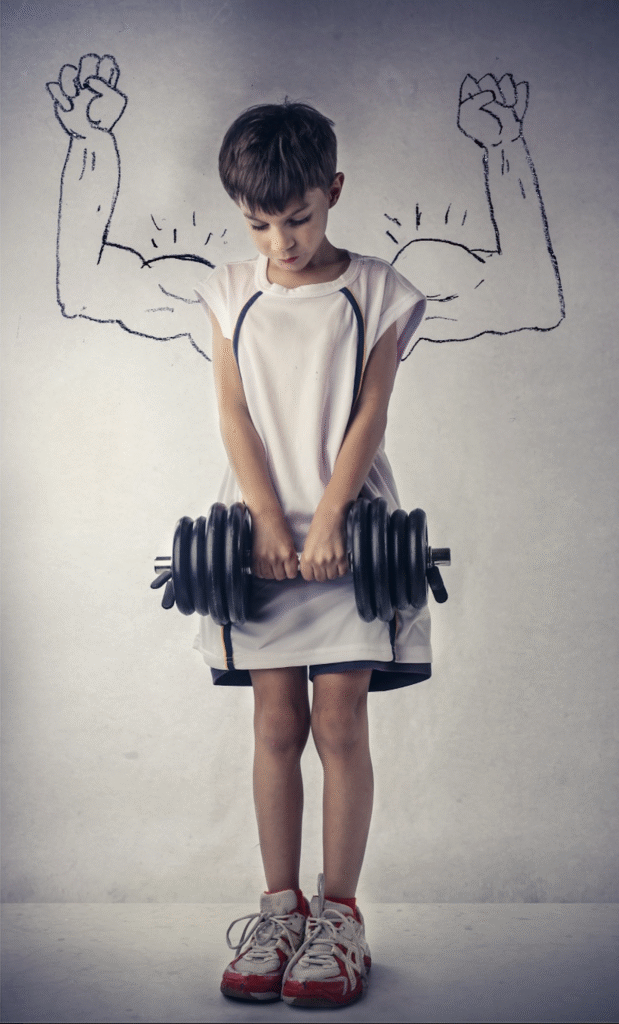
Today’s topic is a little different, but no less controversial. Can children and teenagers do strength training? For 3 decades I’ve been hearing “kids can’t lift weights” because “it will stunt their growth”, and over the past year I’ve seen people at the gym puzzled by the presence of my daughter (9 years old) in a weight room doing strength training.
The confusion goes back to that first post I wrote, remember? If hardly anyone properly explains what physical activity is, imagine talking about resistance-based physical activity for children. If health professionals, educators or even parents don’t master these concepts, how will they recognize that a child playing tug-of-war is, in practice, doing strength training? It’s like trying to explain the benefits of a structured strength program using arguments from decades ago, when we could barely tell weight training apart from Olympic weightlifting.
Resistance-based physical activity, or resistance training (RT), has emerged as a fundamental type of exercise for children and teenagers in an increasingly digital and sedentary world. Everyone knows that childhood is decisive for children’s physical, mental and social development. With so many children spending more time sitting still and gaining more weight than they should, finding activities that keep them healthy and active has become a priority.
For a long time, myths like “kids can’t lift weights” and “weights damage the growth plate” survived despite three decades of solid research and consistent official position statements. Three decades! 30 years ago I was worried about how I was going to beat Donkey Kong 3. But science has moved forward significantly in that time, dismantling all the flimsy opinions and setting out a clear, evidence-based picture. And yet, guess what people still talk about? All the same nonsense I’ve been hearing since I was the chubby kid playing video games.
Today, there is scientific consensus (thank God): well-structured, supervised resistance training programs are safe and bring measurable benefits for strength, motor performance, bone health, body composition and injury prevention. Science has been shouting this for decades, but it seems we keep talking to the walls.
Because, let’s face it, even though we have enough evidence to fill a library, we parents are still stuck with school physical education that is, to be generous, dismal. A scenario where the subject is treated as the poor cousin of education: ignored by school management, underestimated by the other teachers and, not infrequently, taught by professionals who have turned 45 minutes of potential motor development into an “every kid for themselves” session on the court. When, in fact, elsewhere in the world we see this:
But let’s pretend we’re on the same level as the big powers and learn a bit more about this topic. Grab a coffee (and relax: no child is going to end up short like a Minion and strong like the Hulk from doing squats) and let’s go.
Concepts and terminology
Youth resistance training is any activity that applies external resistance to movement with the aim of promoting neuromuscular adaptations: body weight, resistance bands, medicine balls, dumbbells, barbells, kettlebells and machines. In plain terms: if you have to “push against some kind of resistance”, we’re already talking about resistance training. In children, forget the obsession with hypertrophy; here the focus is learning correct movement patterns, developing relative strength, improving inter- and intramuscular coordination and building physical literacy (the ability to move competently in a variety of situations).
The term is clearly different from competitive maximal-strength sports. In preteens, repeated maximal tests, bodybuilding and the famous “one-rep max” are not on the menu. The priority is flawless technique with submaximal loads, because at this stage doing it right is infinitely more important than doing it heavy (this goes for you reading this too).
Developmental stages: children (roughly girls up to 11 and boys up to 13, before secondary sexual characteristics appear) and adolescents (the transition period between childhood and adulthood, with wide individual variation in maturation). This distinction goes far beyond chronological age. Biological maturity and demonstrated technical competence carry much more weight than simply how old the child is when deciding the content and progression of the program.
Physiological foundations: why children gain strength without “growing muscle” like adults
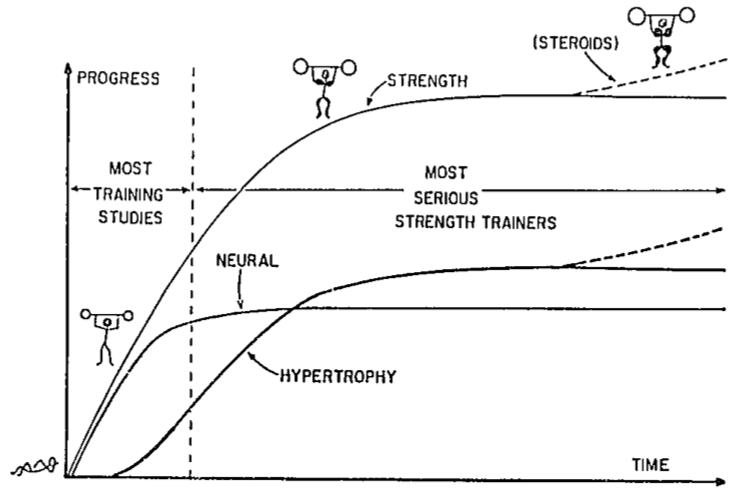
Neurally driven strength gains. In prepubertal children, strength gains come mainly from neural adaptations: the brain learns to recruit muscles better, synchronize motor units and coordinate movements with more precise timing. Muscle itself doesn’t grow much before puberty, which is why children “get strong” without looking more muscular and without the dramatic hormonal changes of teenagers. It’s as if the nervous system became a better conductor of the same orchestra.
Connective tissue and tendons. Resistance training makes tendons and fascia more “battle-ready”: it increases stiffness (in a good way) and the ability to handle load, reducing the risk of overuse injuries, as long as progression doesn’t run over technical competence. There’s an important detail here: muscle adapts faster than tendon. Hence the importance of including technique-focused blocks, controlling how long the muscle stays under tension and properly teaching how to land after jumps.
The growing skeleton. Appropriate mechanical loads during childhood and adolescence are like “an investment in the future”: they promote greater bone mass accrual and a sturdier skeletal architecture. For children who do low-impact sports (such as swimming), adding resistance training and light plyometrics can “make up for” the lack of impact (can you see that impact matters here?), benefiting both mineral density and bone geometry.
The hormonal axis. In children, the hormonal system is still “under construction”: the hypothalamic-pituitary-gonadal axis isn’t mature enough to produce meaningful increases in testosterone just because the child did resistance exercise. The adaptations are primarily neural and technical, not hormonal.
Benefits with the best level of evidence
1) Strength, power and coordination skills Research shows substantial strength gains and small-to-moderate effects on power, linear speed and change of direction, along with clear improvements in motor skills such as jumping, throwing and sprinting. The rule is simple: the more specific the training, the greater the gains in that skill. Programs lasting more than 8 to 12 weeks already show consistent progress; beyond 20 to 24 weeks, the effects become even more evident. In plain terms: patience and consistency pay off more than unbridled intensity.
2) Bone health Periods of development with well-dosed resistance training and low-to-moderate jumps can increase the “annual deposit in the bone bank” modestly, but in a clinically relevant way over the long term. The best results come from the sacred triad: consistent training, correct landing technique and a well-structured, step-by-step progression of impact.
3) Body composition and cardiometabolic profile Resistance training increases lean mass and speeds up energy expenditure even at rest, helping to manage overweight and obesity and improving cardiometabolic markers, especially when combined with aerobic activity and proper nutrition. In young people with obesity, it also improves insulin sensitivity and blood sugar control.
4) Injury prevention Balanced strengthening, landing education and control of the lumbopelvic region significantly reduce the risk of sprains, strains and overuse injuries. Training that combines strength and technical plyometrics is associated with fewer injuries and faster rehabilitation in school athletes. It’s the famous “an ounce of prevention is worth a pound of cure”.
5) Psychosocial and cognitive benefits Resistance training improves self-esteem and perceived physical competence and, perhaps most importantly, increases the chance that the child will stay active in the future (an important fact here: children with physically active parents are 6 times more likely to stay active into adulthood). There is evidence of a positive association between physical fitness and academic performance, mediated by better executive function and mood. In other words: a strong child is a more confident child and, potentially, a smarter one.
Medical Evaluation: When to See the Doctor First
Before starting any resistance training program, a comprehensive medical evaluation is essential. It’s not paranoia; it’s common sense. Children with more complex heart problems (cardiomyopathy, pulmonary arterial hypertension or Marfan syndrome) need clearance from a sports medicine physician before picking up any weights. Better to err on the side of caution.
When It’s Really a No
The American Academy of Pediatrics and the American College of Sports Medicine are clear: children and teenagers with cardiomyopathy (especially hypertrophic cardiomyopathy) should not do strength training. The risk of worsening ventricular hypertrophy or causing hemodynamic decompensation from acute rises in pressure is real and serious.
Other situations that call for extra caution include isolated pulmonary hypertension, stage 2 hypertension or organ damage from hypertension, and a history of chemotherapy with anthracyclines (doxorubicin and similar drugs).
Safety Principles: The Basics Everyone Should Know
The golden rule is simple: children and teenagers should use submaximal loads to develop form and technique across a variety of exercises. The American Academy of Pediatrics and the American College of Sports Medicine do not endorse (and neither do we) the use of continuous maximal lifts in youth training. Proper technique, SUPERVISION (hire a coach, for heaven’s sake) and safety precautions are mandatory for training to be safe and effective.
The Reality of the Numbers: Weight Training Is Safer Than Soccer
Injury rates per 1,000 hours of practice in weight training and weightlifting, when supervised and planned, are much lower than in team sports. We’re talking about 2 to 4 injuries per 1,000 hours in strength settings, while sports such as soccer, rugby and cricket range from 15 to 81 per 1,000 hours. Most injuries in resistance training are accidental and linked to lack of supervision or poor technique.
Debunking the Classic Myths
Growth plate injury has not been reported in prospective studies with proper guidance and supervision. The physis (growth plate) tolerates loads higher than those usually applied in resistance training. The greater risk lies in poorly performed jumping and landing activities, where ground reaction force can reach 5 to 7 times body weight.
On linear growth: there is no evidence that resistance training, when properly conducted, negatively affects final height. The literature on artistic gymnastics shows that the shorter stature of elite athletes seems to reflect phenotype selection and the timing of maturation, with growth velocity catching up during periods of lower competitive volume.
Interestingly, children can improve more than teenagers on relative performance measures, precisely because they have more room for neural and motor adaptations.
In short: the risk isn’t inherent to resistance training, but to bad practices. Qualified supervision, competence-based progression and an organized environment are the best “safety insurance” there is.
Minimum Age: What the Science Says
The minimum age recommended by the American Academy of Pediatrics and the American College of Sports Medicine is 7-8 years for structured resistance training programs.
Why 7-8 years? It’s not a magic date on the calendar. This age marks when most children develop:
- The emotional maturity to follow basic safety instructions
- Enough attention span to learn correct technique
- The motor coordination to perform basic movements with control
- An understanding of concepts such as “push hard” and “stop when asked”
The real criterion isn’t chronological age, but individual competence. Some 6-year-olds may be ready, while some 9-year-olds still need more time. The physical education professional should assess each case individually, considering maturity, coordination and the ability to follow safety instructions.
Practical summary: If the child can pay attention for 10-15 minutes, understands “stop when I say so” and shows basic coordination, they’re probably ready to start, regardless of their exact age.
General Recommendations for Practice
Here I’ll state the obvious, just to follow the ritual! To make sure resistance-based physical activity is safe and effective for children (and so that we parents can sleep at night), a few key guidelines should be followed:
1. Prior Medical Evaluation Before starting any strength training program, it’s advisable for the child to have a medical evaluation to make sure there are no contraindications. It’s not needless red tape; it’s intelligence.
2. Qualified Professional Supervision The presence of a physical education professional experienced in training children is MANDATORY. “My cousin who’s been working out for 10 years” doesn’t count as qualified supervision.
3. Focus on Technique and Movement The priority should be teaching and perfecting correct exercise technique before worrying about increasing loads. Full, controlled movements are ideal. Technique comes first.
4. Appropriate Loads Use loads that allow the child/teenager to complete the prescribed number of reps with good form. Generally, loads that allow 10-15 reps with good execution are a good starting point. If technique falls apart, the weight is too heavy.
5. Controlled Volume and Frequency The number of sets and the weekly frequency should be adapted to the child’s age and fitness level. Generally, 1 to 3 sets of 10 to 15 reps, 2 to 3 times a week, are enough to get benefits. Less is more (sorry, I couldn’t resist a nod to the Brazilian band Menos é Mais) when it comes to quality.
6. Variety and Play Include a variety of exercises and methods to keep training interesting and motivating for a generation that finds 20-minute videos too long and 30-second TikToks too slow. Playful exercises and challenges can be very effective. A bored child is a child who will quit training (my opinion as a doctor and a parent: children shouldn’t get to decide to quit training. We’re in charge, and physical activity is NON-NEGOTIABLE).
7. Warm-Up and Stretching Each session should start with a dynamic warm-up and end with gentle static or dynamic stretching.
8. Hydration and Nutrition Make sure the child is well hydrated before, during and after exercise, and that their diet is balanced to support growth and muscle recovery. Basic stuff.
9. Gradual Progression Gradually increase the intensity, volume or complexity of the exercises as the child progresses and shows greater ability. Patience pays off more than haste.
10. Individualization Every child is unique (as our mothers used to say: you’re not everybody). The training program should be individualized, taking into account chronological and biological age, maturity level, motor skills and specific goals. One-size-fits-all recipes don’t work with people.
Strength Training Programs for Children
The Recipe by Age Group
Structuring a strength training program for children should take into account different age groups and stages of development. It’s not all the same, and treating a 4-year-old the same way as a 7-year-old makes no sense.
Preschoolers (3-6 years):
At this stage, the main focus should be on general motor development through active play. Body-weight exercises such as jumping, crawling, climbing, running and games that involve pushing and pulling objects are ideal. The guidance is simple: fun activities, with no obsession about results. If they’re not laughing, having fun, getting dirty and staining or tearing their clothes, it’s being done wrong.
Early School Years (7-10 years):
As body awareness and motor control develop, more structured exercises can be introduced.
- Focus: Learning the fundamental movement patterns (squatting, pulling, pushing, lifting, walking, running, jumping). It’s like teaching the alphabet of movement.
- Exercises: Body-weight exercises (modified push-ups, squats, planks, jumps), resistance band exercises, and progression to very light weights with close attention to technique. Technique is everything at this age.
- Frequency: 2 times a week.
- Goal: Develop general strength, coordination and balance, and increase bone density. We’re building the base of the pyramid.
Later School Years and Early Adolescence (11-14 years):
At this stage, children usually have greater coordination and a better grasp of instructions. Training can become a bit more intense, but professional supervision remains crucial.
- Focus: Increasing muscle strength, muscular endurance and power, and improving body composition.
- Exercises: Progression to light and moderate free weights, adapted weight machines, medicine balls, and more complex exercises involving multiple muscle groups. Multi-joint exercises (such as squats, an adapted deadlift, and barbell/dumbbell bench press) can be introduced with perfect technique.
- Frequency: 2-3 times a week, with rest days between sessions for the same muscle groups.
- Hormonal Adaptations: Puberty begins at this stage, which also allows more significant gains in muscle mass, although still with less potential than in adults. Hormones finally start to help.
Late Adolescence (15+ years):
At this stage, teenagers already have a physiological development closer to that of adults, which allows more robust training programs, with greater intensity and variety, as long as technique is flawless and supervision continues. Goals can include gains in strength, power, hypertrophy and preparation for specific sports.
Let me stress this: These are only general suggestions. An individualized program, designed by a qualified professional, is always the best way. Recipes are for cakes, not for training.
Conclusion: The Bill Has Arrived
So that’s it. After all this talk, the reality is simpler and scarier than it seems: we are raising the first generation in history that is physically weaker than the one before. And I’m not talking about the strength to do Olympic weightlifting; I’m talking about the basic strength to live well.
The Real Problem
What happens when a child doesn’t have enough strength even to do basic physical activity with confidence? They stop trying. And when they stop trying, a vicious cycle sets in: they get weaker, avoid more activity, and get weaker still. It’s cruel math.
Worse: this weakness in childhood doesn’t magically disappear in adolescence. On the contrary, it “sticks” and carries on into adulthood. A weak child today is an adult at higher risk of diabetes, cardiovascular problems and even mental health disorders tomorrow. The cost of this? Trillions in health spending and a whole society that is less resilient.
The Hidden Part of the Iceberg
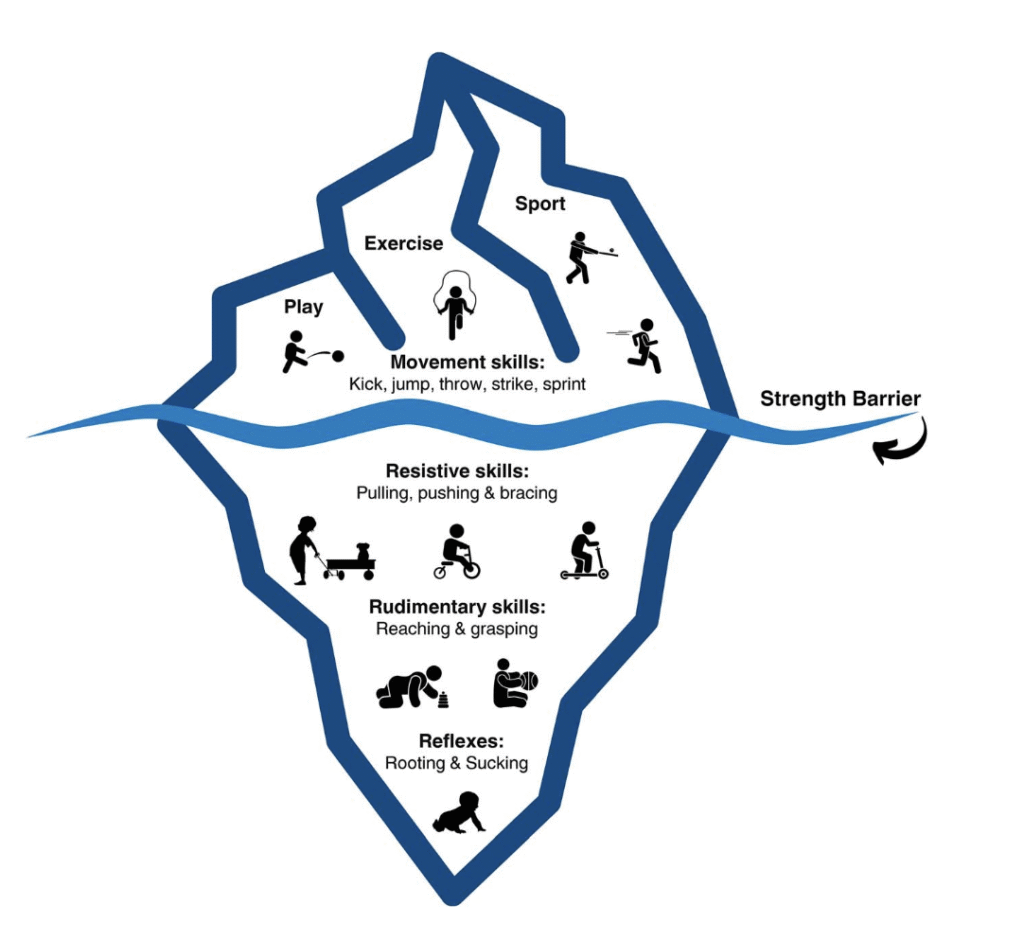
Muscle strength is like the foundation of a house: nobody sees it, but without it nothing works properly. A child needs a minimum level of strength to run, jump, play and even to be coordinated. Without it, they’re physically limited and, worse still, mentally limited. Because a child who can’t keep up with their friends in games develops a fear of trying new things.
Structured, supervised and progressive resistance training. We’re not talking about creating mini-bodybuilders; we’re talking about giving children the basic tools to function well in their own bodies.
If we don’t act now, this generation will pay the bill for our neglect for the next 50 years. And we’ll all pay along with them, whether in taxes for an overloaded health system (already in great shape, right?) or by living in a less capable society.
We can’t keep pretending this will sort itself out, or that “naturally active kids” are enough in today’s world. The structure of society has changed, lifestyles have changed, so our approach has to change too. Resistance training for children isn’t a luxury; it has become a basic necessity. And the sooner we start treating it with the seriousness it deserves, the better for everyone.
Now let’s stop looking for excuses, because we need to be firm and MAKE our children train. Their future, literally and figuratively, depends on the strength they develop today.
A hug
G
P.S.: I think I’m starting to figure out how the layout of this thing works.
References
Main Article:
- Faigenbaum, A.D. et al. (2023) – May the Force Be with Youth: Foundational Strength for Lifelong Development. Current Sports Medicine Reports, 22(12), 414-422. Link
Position Stands and Official Consensus Statements:
- American Academy of Pediatrics (2020) – Resistance Training for Children and Adolescents. Pediatrics, 145(6), e20201011. Link
- Lloyd, R.S. et al. (2014) – Position statement on youth resistance training: the 2014 International Consensus. British Journal of Sports Medicine, 50(17), 1005-1015. Link
- World Health Organization (2020) – WHO guidelines on physical activity and sedentary behaviour. Geneva: World Health Organization. Link
- National Strength and Conditioning Association (2009) – Youth resistance training: updated position statement paper. Journal of Strength and Conditioning Research, 23(5 Suppl), S60-79. Link
Meta-Analyses and Systematic Reviews:
- Lesinski, M. et al. (2020) – Effects of resistance training on physical fitness in healthy children and adolescents: an umbrella review. Sports Medicine, 50(11), 1901-1928. Link
- Behringer, M. et al. (2010) – Effects of resistance training in children and adolescents: a meta-analysis. Pediatrics, 126(5), e1199-1210. Link
- Collins, H. et al. (2019) – The effect of resistance training interventions on fundamental movement skills in youth: a meta-analysis. Sports Medicine Open, 5(1), 17. Link
- Lauersen, J.B. et al. (2018) – Strength training as superior, dose-dependent and safe prevention of acute and overuse sports injuries: a systematic review, qualitative analysis and meta-analysis. British Journal of Sports Medicine, 52(24), 1557-1563. Link
Recent Studies:
- Chaabene, H. et al. (2025) – The era of resistance training as a primary form of physical activity for physical fitness and health in youth has come. Sports Medicine. Link
- Ruas, C.V. et al. (2024) – Resistance training effects on pubertal children with a risk of developing pediatric dynapenia. European Journal of Applied Physiology, 124(7), 2123-2137. Link
- Liu, X. et al. (2024) – Effects of aerobic exercise combined with resistance training on body composition and metabolic health in children and adolescents with overweight or obesity: systematic review and meta-analysis. Frontiers in Public Health, 12, 1409660. Link
Specific Benefits:
- García-Hermoso, A. et al. (2019) – Is muscular fitness associated with future health benefits in children and adolescents? A systematic review and meta-analysis of longitudinal studies. Sports Medicine, 49(7), 1079-1094. Link
- Torres-Costoso, A. et al. (2020) – Association between muscular strength and bone health from children to young adults: a systematic review and meta-analysis. Sports Medicine, 50(6), 1163-1190. Link
- de Lima, T.R. et al. (2022) – Muscular fitness and cardiometabolic variables in children and adolescents: a systematic review. Sports Medicine, 52(7), 1555-1575. Link
- Collins, H. et al. (2019) – The effect of resistance training interventions on ‘the self’ in youth: a systematic review and meta-analysis. Sports Medicine Open, 5(1), 29. Link
Classic Studies and Fundamentals:
- Myers, A.M. et al. (2017) – Resistance training for children and adolescents. Translational Pediatrics, 6(3), 137-143. Link
- Dahab, K.S. & McCambridge, T.M. (2009) – Strength training in children and adolescents: raising the bar for young athletes? Sports Health, 1(3), 223-226. Link
- Faigenbaum, A.D. (2010) – Pediatric resistance training: current issues and concerns. La Medicina dello Sport, 63(4), 551-565. Link
Technical References:
- American College of Sports Medicine (2016) – ACSM’s guidelines for exercise testing and prescription. 10th ed. Philadelphia: Lippincott Williams & Wilkins. Link
- Fleck, S.J. & Kraemer, W.J. (2017) – Designing resistance training programs. 4th ed. Champaign, IL: Human Kinetics. Link
Brazilian Reference:
- Sociedade Brasileira de Pediatria (2025) – Crianças e adolescentes podem fazer musculação? [Can children and adolescents do weight training?] Guidance note (in Portuguese). São Paulo: SBP. Link