Also in: Português · Español · Italiano · 中文 · हिन्दी
Main points
- Bioimpedance is reliable for comparing one of your tests with the previous one, done on the same device and in the same way; for pinning down your body fat percentage from a single test, it is less accurate.
- Each device measures a different path through the body (only the feet, only the hands, or hands and feet) and does the math with a manufacturer formula that is not made public, so two devices rarely give the same number.
- In a study that tested home scales and a research device, the error in body fat percentage changed from one device to the next and went above 12 points on the worst scale, with the smallest errors on the devices that measure through the hands and feet.
- It is less accurate in severe obesity, in very lean athletes, in older adults and in people who are swollen because of an illness.
- The drugstore scale can be one of several types, and how much you can trust the number depends on the type of device and on always repeating the test on it.
Two bioimpedance devices rarely give the same body fat percentage for the same person, and anyone who has stepped on a drugstore scale and later had the test at a clinic has probably seen the numbers disagree. Each device measures a different part of the body and does the math with its own manufacturer’s formula. Bioimpedance is reliable when you compare one of your tests with another done on the same device and in the same way. To give your exact body fat percentage from a single test, most devices are less accurate than a DXA scan. The size of the error varies from one device to another, and only the best ones, with 8 electrodes, come close to it.
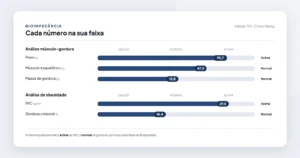
What the device measures and how to read each line of the report are covered in the guide to the bioimpedance test. Here the only question is how far you can trust the number: how far it strays from a DXA scan, why one device disagrees with another, in whom bioimpedance gets it most wrong and what it gets right. Fasting, preparation and normal values have posts of their own.
Is bioimpedance accurate?
You can trust bioimpedance when the comparison is you against yourself. Repeated on the same device, at the same time of day and with the same preparation, it repeats the result very precisely and shows well whether fat is going down and lean mass is holding steady. For the number from a single test, the trust is lower. Compared with a DXA scan and with more complete reference methods, it usually misses each person’s body fat percentage by a few points, up or down. Scales that measure only through the feet or only through the hands are less accurate than 8-electrode devices, which measure through the hands and feet. Between the drugstore scale and a clinic device such as the InBody, the type of device and repeating the test on it matter more than the brand or the place.
Why each device shows a different number
A bioimpedance device measures how much the body resists a weak electrical current. That resistance goes into a formula along with your weight, height, age and sex, and the formula works out body water, lean mass and, from what is left of the weight, fat. Two devices can disagree at each of these steps, and a 2026 guide written by an international panel of experts, in the American Journal of Clinical Nutrition, describes the differences between them.
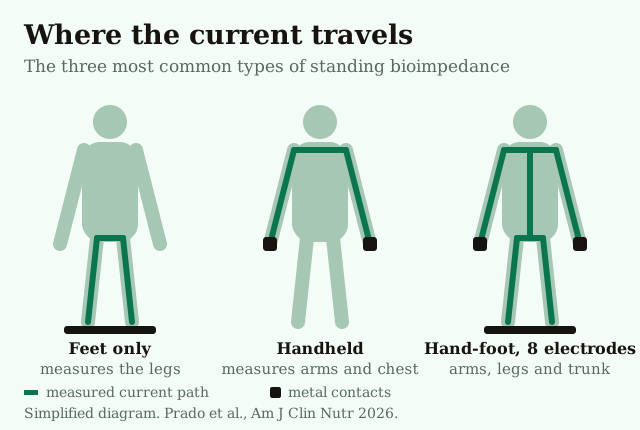
The first one is the path of the current. On a feet-only scale, the metal contacts sit under your feet, and the current goes up one leg and down the other, without passing through the belly or the arms. On a handheld device, it goes from one hand to the other, through the arms and the chest. In both cases, the device measures only the lower or the upper half of the body and estimates the rest with the formula, which is less accurate in people who store fat unevenly, such as someone with a large belly and thin legs. The 8-electrode device has a pair of contacts on each hand and each foot and measures each arm, each leg and the trunk separately.
The second difference is the frequency of the current. The simpler devices use a single frequency, which gives an estimate of total body water. Multi-frequency devices use currents that pass outside the cells and others that go through the cells, and that lets them estimate the water outside the cells, something that, according to the same guide, only these devices have been shown to do well. This can help when there is swelling, although the European bioimpedance guidelines of 2004 were already calling for more studies of these devices in people whose body water is altered.
The third difference lies in the manufacturer’s formula. Each brand builds its equation from a group of people measured with a reference method and, as a rule, does not say who those people were, what the math is or how it was tested, which the 2026 guide calls a black box. A formula built on one kind of people is less accurate in another kind, and a software update on the device can change the result without anything having changed in your body. On home scales, choosing athlete mode or normal mode also switches the math being used.
Drugstore scale or a clinic device such as the InBody
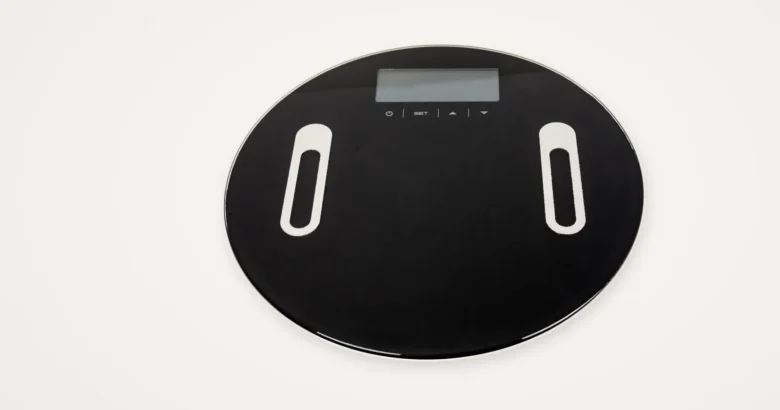
The so-called drugstore scale is not one single device. Depending on the place, it may be a scale that measures only through the feet, an 8-electrode device or even a model identical to one found in a clinic. InBody is one of the brands of 8-electrode, multi-frequency devices, common in clinics, gyms and studies. To know how much to trust the number, ask what type of device it is.
The study that best answers this came out in 2023 in the British Journal of Nutrition. Researchers at Texas Tech University, in the United States, put healthy adults on fifteen bioimpedance devices on the same day, most of them home scales that measure only through the feet (the study’s lead researcher declared having received devices on loan or as donations from manufacturers, InBody among them, which had no role in the work). They then compared each device’s result with a four-compartment model, which combines a DXA scan, a measurement of body volume and one of body water and is more exact than any of these methods alone. The error in body fat percentage for each person ranged from 3.3 to 12.6 points, depending on the device.
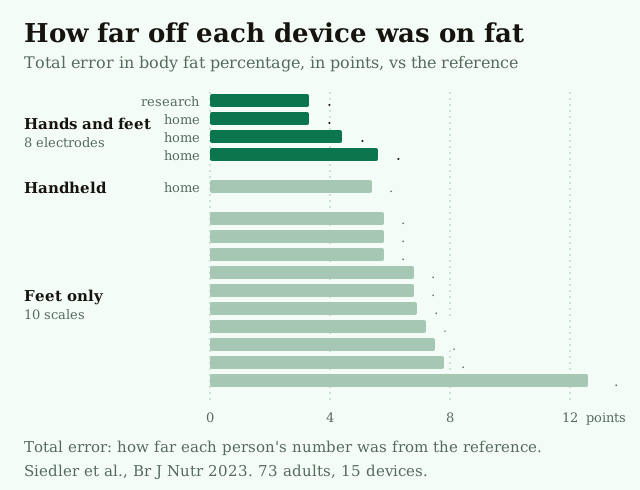
The hand and foot models were among those with the smallest errors, and the research device and one 8-electrode home device had the lowest error in the group. The feet-only scales ranged from fair to poor. Several of them, and the handheld device as well, pulled the result toward the middle: they gave lean people too much fat and people with a lot of fat too little, and the authors wrote that anyone far from the average should be more wary of the number from these scales. Some feet-only scales repeated almost the same number when the person stepped back on right away, which looks like precision and may be nothing more than a lock built into the device.
With the InBody, the results resemble those of the other hand and foot models. A paper published in the Journal of Clinical Densitometry compared models of the brand, from the portable one to the clinic ones, with a DXA scan and found a small error in each person, with a bias that always went in the same direction (fat slightly lower, lean mass slightly higher), and the portable model did almost as well as the large ones. In a 2022 study of adults from various backgrounds, against the four-compartment model, the clinic InBody and the DXA scan itself had similar errors in body fat percentage.
| Type of device | What it measures through | What it is best for |
|---|---|---|
| Feet-only scale | legs and hips | seeing the trend at home, always on the same scale |
| Handheld device | arms and chest | a rough idea, with a larger error in people far from the average |
| Hands and feet, 8 electrodes | each arm, each leg and the trunk | tracking fat and lean mass with more confidence |
| DXA scan (DEXA) | the whole body, bone included | the most exact number from a single test |
How far off bioimpedance is compared with a DXA scan
A DXA scan (also called DEXA) is the low-dose X-ray test that separates fat, lean mass and bone, and it is the yardstick most used in studies. The main study for this post measured adults who trained, at a university in Florida, with the InBody 770 and with a DXA scan on the same day, before and after four weeks of dieting, and it came out in 2019 in the Journal of Functional Morphology and Kinesiology (with no outside funding). From the very first measurement, the InBody showed about 4 points less fat than the DXA scan and, in exchange, a higher lean mass.
This bias in the same direction showed up in the studies comparing the InBody with a DXA scan in adults, and that makes the direction of the error predictable for the group. In older adults, the bias in arm and leg lean mass went the other way, below the DXA scan. For each person, the size changes: the same device can be spot on for one and miss by several points for another. In a Dutch study of middle-aged adults, the lean mass from a device that measures each part of the body separately agreed well with the DXA scan, and body fat percentage had a wider margin. That makes sense, because fat comes out of the math as what is left of the weight after lean mass is taken away, so a small error in lean mass turns into a proportionally larger error in fat, all the more in people with little fat.
A DXA scan also has its own margin of error, which shows up in the studies that use the four-compartment model as the yardstick, and a good 8-electrode device comes close to it. When I say that bioimpedance is off by a few points, the comparison is with another test that is also an estimate, usually a more precise one and with bone included.
Where bioimpedance gets it most wrong
The largest errors show up in people who don’t match the profile of those used to build the formulas and in people whose body water is outside the normal range. In the four groups below, the number from a single test calls for more caution, and the comparison with the previous test, on the same device, remains more useful than that number.
Severe obesity
In a 2019 review in the International Journal of Obesity on multi-frequency devices in people with obesity, bioimpedance underestimated fat in most of the studies and overestimated lean mass in many of them. Agreement was good for the group average and worse for each person, and it improved when the formula was adjusted for obesity. Add the pull toward the middle seen on feet-only scales, and people with a lot of fat tend to see a number lower than the real one.
Very lean athletes
At the other extreme, athletes with little body fat tend to see a higher percentage than the real one on scales that pull toward the middle. In a study of American college athletes, the feet-only scale got lean mass right, but it missed each athlete’s body fat percentage in a way that depended on how much fat he had. The athlete mode on home scales changes the math, and switching modes between one test and the next creates a change that did not happen. An athlete who sees weight and fat dropping nonstop, with fatigue and falling performance, may be eating less than he burns, as I explained in the post on energy deficiency in sport.
Older adults
Age changes the body’s water and muscle, and a formula built on a different kind of people is less accurate when applied to older adults, as the 2026 guide points out. In a large Japanese study of older adults, published in 2026 in Clinical Nutrition ESPEN, the InBody 770 showed less lean mass in the arms and legs than the DXA scan. With the low muscle cutoff from the Asian sarcopenia guidelines, the device flagged low muscle in far more older adults than the DXA scan did. The count came out similar to the DXA scan’s when the researchers used a cutoff specific to the device. In older adults, the bioimpedance number alone does not settle a diagnosis of muscle loss, which also depends on strength and physical performance.
Swelling from an illness
People with swollen legs, fluid in the belly or fluid retention from heart, kidney or liver disease have extra water outside the cells, and the formula reads that water as lean mass. The result is lean mass that is too high and fat that is too low. The European bioimpedance guidelines of 2004 already said that the formulas only apply to people with no major change in body water and salts, and the 2026 guide repeats the warning, because in these cases the number ends up following the swelling.
Where bioimpedance gets it right
Bioimpedance works best for telling whether you changed from one test to the next. In the 2019 study with the InBody 770, the device started below the DXA scan, but the two lines went down together during the diet, and the fat loss measured by the two methods was similar.
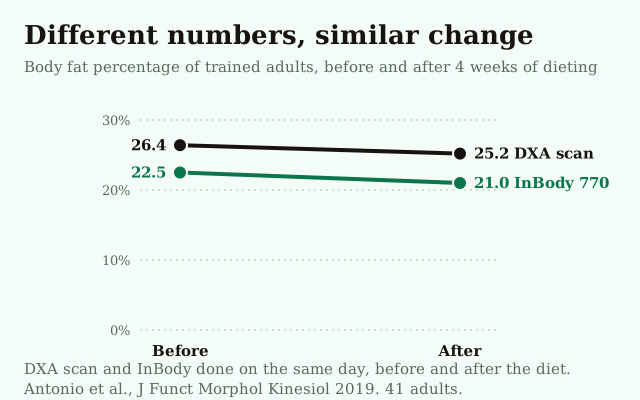
The change measured by the InBody varied more from one person to another than the DXA scan’s did, and the volunteers were young, trained adults, and the result does not apply directly to older adults or to people with severe obesity. In the 2023 study of scales, the error in measuring change was also smaller than the error of the single number, and the authors found the hand and foot devices among the best for tracking, along with some feet-only scales.
For a change to be real, it has to go beyond the device’s own variation. In the study that repeated the test on InBody models a few days apart, only differences above about 2 points of fat, or an equivalent change in lean mass, fell outside that variation. One point less from one month to the next may be just the noise of the test, and the same drop repeated over several tests in a row is much more likely to be real.
The 2026 guide lists what has to stay the same for the comparison to hold: the same device, the same way of placing your hands and feet, the same device mode and, preferably, the same software version. This matters for people losing weight with a weight-loss injection, where part of the weight lost may come from muscle, and for people doing strength training to protect muscle while losing weight, because comparing on the same device shows whether the plan worked.
Metabolic age and other showcase numbers
Many scales show metabolic age, a visceral fat score, body type and an overall score. The 2026 guide says these indexes are there to keep users engaged with the scale and should not be read as a direct measurement: the math behind them is not disclosed, and the visceral fat score does not measure the fat inside the belly the way an imaging test does. The resting energy expenditure on the report is also a formula, and the test that truly measures it is covered in the post on how many calories you burn at rest. Use fat and lean mass, which are the numbers with research behind them. The visceral fat score is useful, at most, for comparing you with yourself on the same device, and metabolic age, body type and the overall score are just curiosities.
When the bioimpedance number is not enough
In some situations bioimpedance does not answer the question and it is worth getting a medical assessment. Leg swelling that does not go away, a growing belly with shortness of breath or weight going up fast for no clear reason may be water from heart, kidney or liver disease, and they call for a doctor’s visit before any new body composition test. Unintentional weight loss, older adults with loss of strength or falls, and athletes with missed periods or a stress fracture also need an assessment, because the problem goes beyond body fat percentage. When the number needs to be more exact, as when muscle loss is suspected in an older adult, in severe obesity (when possible) or when bone mass also matters, a DXA scan usually gives a better answer, and the doctor decides whether it is worthwhile in your case.
In practice
- Pick one device and stick with it, preferably an 8-electrode one; ask what type of device the drugstore or the gym uses before you trust the number.
- Always repeat it at the same time of day, with the same preparation, the same mode (normal or athlete) and your correct height and age.
- Do not compare the number from one device with another, or the drugstore’s with the clinic’s; compare each test with the previous one on the same device.
- Look at the direction over several tests in a row and do not worry about a small difference from one month to the next.
- Read fat and lean mass, compare the visceral fat score only with your own previous test and set aside metabolic age and the device’s score.
- If you have severe obesity, are a very lean athlete, are an older adult or are swollen, talk to your doctor before drawing conclusions from the number.
Conclusion
Bioimpedance is reliable for what it does well: showing, test after test, on the same device and in the same way, whether your fat is going down and your lean mass is holding steady. On a single test, it misses body fat percentage by a few points, and it misses more on feet-only or handheld scales and in people far from the average, such as people with severe obesity, very lean athletes, older adults and people who are swollen. If you are torn between the drugstore scale and the InBody, look first at what the device measures through and always repeat the test on it; when the number needs to be exact, a DXA scan gives a better answer.
All the best!
G
Responsible physician: Dr. Gilberto Nering Junior, sports medicine physician, CRM-SP 160822, RQE 142486 (Sports Medicine, Brazil), responsible for the clinic’s bioimpedance test.
This text was not sponsored, is for information only and does not replace an individual assessment. Questions about the content: contact the clinic.
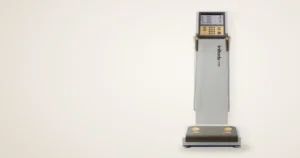
Cover photo: Raimond Spekking, CC BY-SA 4.0, on Wikimedia Commons, cropped, cleaned up and placed on a light studio background.
Frequently asked questions about how reliable bioimpedance is
Is drugstore bioimpedance reliable?
Drugstore bioimpedance is as reliable as the device the drugstore uses. Scales that measure only through the feet miss body fat percentage by more, and hand and foot devices with 8 electrodes miss by less. On any of them, the number is useful for tracking you on the same device, not for comparing with another one.
Is the InBody reliable?
The InBody is a hand and foot, multi-frequency device that, in studies of adults, comes close to a DXA scan, usually with less fat and more lean mass than the scan shows. It repeats the result well and is useful for tracking change over time, always on the same device and with the same preparation.
If bioimpedance and DEXA give different numbers, which one counts?
A difference of a few points in body fat percentage between bioimpedance and DEXA is expected. DEXA counts for more when it comes to the number from a single test, and bioimpedance counts for comparing it with itself, on the same device, over time.
Why did bioimpedance give a different result on another device?
Each device measures a different path through the body and uses its own manufacturer’s formula, which is not made public. For that reason two devices rarely give the same number for the same person, and the comparison only holds within the same device.
Is the metabolic age from bioimpedance worth anything?
Metabolic age is an index created by the manufacturer, with no disclosed math and no direct measurement behind it. It is a curiosity; for tracking your health, the useful numbers are body fat percentage and lean mass.
References
- Antonio J, Kenyon M, Ellerbroek A, et al. Comparison of dual-energy X-ray absorptiometry (DXA) versus a multi-frequency bioelectrical impedance (InBody 770) device for body composition assessment after a 4-week hypoenergetic diet. J Funct Morphol Kinesiol. 2019;4(2):23. doi:10.3390/jfmk4020023
- Becroft L, Ooi G, Forsyth A, et al. Validity of multi-frequency bioelectric impedance methods to measure body composition in obese patients: a systematic review. Int J Obes (Lond). 2019;43(8):1497-1507. doi:10.1038/s41366-018-0285-9
- Blue MNM, Hirsch KR, Brewer GJ, et al. The validation of contemporary body composition methods in various races and ethnicities. Br J Nutr. 2022;128(12):2387-2397. doi:10.1017/S0007114522000368
- Kyle UG, Bosaeus I, De Lorenzo AD, et al. Bioelectrical impedance analysis, part I: review of principles and methods. Clin Nutr. 2004;23(5):1226-1243. doi:10.1016/j.clnu.2004.06.004
- Ling CH, de Craen AJ, Slagboom PE, et al. Accuracy of direct segmental multi-frequency bioimpedance analysis in the assessment of total body and segmental body composition in middle-aged adult population. Clin Nutr. 2011;30(5):610-615. doi:10.1016/j.clnu.2011.04.001
- McLester CN, Nickerson BS, Kliszczewicz BM, et al. Reliability and agreement of various InBody body composition analyzers as compared to dual-energy X-ray absorptiometry in healthy men and women. J Clin Densitom. 2020;23(3):443-450. doi:10.1016/j.jocd.2018.10.008
- Nakagata T, Yamada Y, Tabata H, et al. Agreement and systematic difference between bioelectrical impedance analysis and dual-energy X-ray absorptiometry for appendicular lean mass in 1617 community-dwelling older adults: the Bunkyo Health Study. Clin Nutr ESPEN. 2026;72:102961. doi:10.1016/j.clnesp.2026.102961
- Nickerson BS, Snarr RL, Ryan GA. Validity of foot-to-foot bioelectrical impedance for estimating body composition in NCAA Division I male athletes: a 3-compartment model comparison. J Strength Cond Res. 2019;33(12):3361-3366. doi:10.1519/JSC.0000000000002999
- Prado CM, Gonzalez MC, Norman K, et al. Methodological standards for body composition assessment, an expert-endorsed guide for research and clinical applications: bioimpedance, dual-energy X-ray absorptiometry, computerized tomography, and ultrasound methods. Am J Clin Nutr. 2026;123(5):101283. doi:10.1016/j.ajcnut.2026.101283
- Siedler MR, Rodriguez C, Stratton MT, et al. Assessing the reliability and cross-sectional and longitudinal validity of fifteen bioelectrical impedance analysis devices. Br J Nutr. 2023;130(5):827-840. doi:10.1017/S0007114522003749