
Also in: Português · Español · Italiano · 中文 · हिन्दी
Main points
- Slow metabolism exists, but it is much less common than people say. What most separates one person’s resting energy expenditure from another’s is the amount of lean mass, the sum of muscles, organs and bones.
- In adult life, energy expenditure adjusted for body size stays stable for decades and only starts to fall after age 60.
- Hypothyroidism really lowers energy expenditure, shows up on a blood test and can be treated. Thyroid hormone in people with a normal thyroid does not work as an obesity treatment and does harm.
- After weight loss, the body saves energy. With moderate weight loss this saving is small and, in one study, had disappeared a year later; with the huge losses of a reality show it lasted for years.
- Green tea, coffee, chili pepper and fat burners change energy expenditure very little. Strength training, enough protein and everyday movement count for more, and sleep helps keep hunger in check and hold on to muscle.
Slow metabolism exists, just much less than its reputation suggests. When researchers measure the resting energy expenditure of many people in the lab, those who burn less usually have less lean mass, which is the sum of muscles, organs and bones. A small difference remains between people of the same size, the thyroid can put the brakes on energy expenditure when it is diseased, and the body saves energy after weight loss, a little with moderate losses and a lot with huge ones.
Two studies I mentioned in passing when I wrote about how many calories the body burns at rest come back here, this time with the numbers: the international survey that measured the energy expenditure of people of all ages, published in 2021 in Science, and the follow-up of contestants from a weight-loss reality show six years after the program. The hunger that rises when weight drops was left for the post on the weight-loss plateau, and this post answers whether slow metabolism exists and what to do about it.
Is slow metabolism real?
Slow metabolism exists when a person burns a little less at rest than others of the same size, when the thyroid is diseased and when the body saves energy because of a diet. The first difference is real, but it is usually small. Hypothyroidism brings energy expenditure down, is confirmed with a blood test and can be treated. And the body saves energy during and after a diet, to a degree that, in studies, was greater in people who lost more weight and kept it off.
Outside these situations, the feeling of a slow metabolism usually comes from little lean mass, from less movement than the person thinks or from more food than they write down. To burn more and protect the energy expenditure you already have, what works is building and keeping muscle with strength training, eating enough protein, moving more outside your workouts, sleeping well, staying away from crash diets and checking the thyroid when there are symptoms.
What makes one metabolism different from another
Resting energy expenditure is the cost of keeping the organs working and the body temperature steady while you are still, and each tissue burns a different amount per kilo. The values for each tissue, checked in a 2010 study that measured adults’ organs with MRI, show that resting muscle burns about 13 kcal per kilo per day, that fat burns even less and that the liver, brain, heart and kidneys burn many times more per kilo. There is a lot of muscle in the body, so it counts in the total even though it burns little per kilo, while the organs count because each kilo of them burns so much.
Researchers in Scotland measured the basal metabolic rate, the resting energy expenditure measured right after waking up and while fasting, in a group of adults, some of them more than once, along with each person’s body composition, and published the results in 2005 in the American Journal of Clinical Nutrition. The same person’s measurement barely changed from one time to the next. Between people, lean mass explained most of the difference, and fat and age explained small pieces. Sex stopped mattering once lean mass was included in the calculation, which suggests that women burn less, on average, because they have less lean mass.
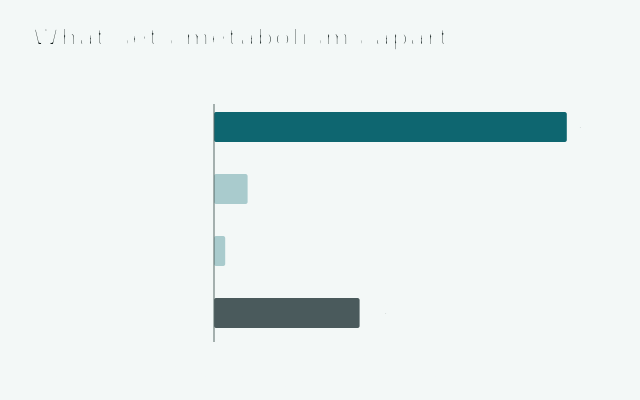
Part of the difference between people, the bottom bar of the chart, fell outside what lean mass, fat and age explain. It suggests that two people with the same body may burn slightly different amounts, although this leftover counts far less than lean mass. In men, part of it tracked the level of T4, one of the thyroid hormones.
Does age slow down metabolism?
Metabolism slows with age much later than people think. An international consortium pooled measurements of total energy expenditure from thousands of people, from newborns to the very old, all made with doubly labeled water: the person drinks a dose of water with harmless markers, and their urine over the following days shows how much they burned in normal life.
With energy expenditure adjusted, that is, comparing people of the same size and body composition, the authors found four phases: expenditure rises quickly in the first year of life, slowly declines until age 20, stays stable in adult life (including during pregnancy) and falls in old age. After age 60, it falls about 0.7% a year.
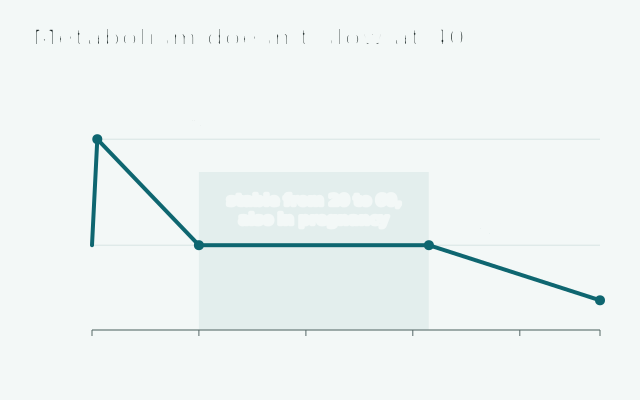
The data do not show a metabolism that slows down at 30, at 40 or in middle age. Men and women followed the same curve, stable until around 60. When weight goes up in this phase, this study does not point to metabolism as the culprit, and the cause must lie elsewhere, such as in what people eat, which it did not measure.
After 60, the decline is real: organs and tissues start to burn a little less per kilo, and muscle loss, common at this stage, lowers expenditure even further. This second part can be fixed, because strength training maintains and rebuilds muscle in older adults too, and I wrote about how to protect that muscle during a diet in the post on losing weight without losing muscle.
When the thyroid slows your metabolism
The thyroid sits at the front of the neck and produces T4 and T3, the hormones that set the pace of energy use in the cells. In hypothyroidism, it produces too little, and resting energy expenditure falls, sometimes a lot in the more severe cases. The signs come on gradually and are not very specific: tiredness, feeling cold when others don’t, constipation, dry skin, a puffy face, irregular periods and a few extra kilos. The diagnosis comes from a simple blood test, TSH and free T4, and treatment replaces the missing hormone.
The American Thyroid Association guideline on the treatment of hypothyroidism, published in 2014 in the journal Thyroid, explains that in this disease most of the weight gained is retained fluid, and that treatment, even when it brings resting energy expenditure back to normal, does not remove a meaningful amount of fat. In subclinical hypothyroidism, when only TSH is slightly raised, treating with medication did not change weight in the studies. When this treatment is indicated, it is for other reasons, such as the TSH value, symptoms or a pregnancy. A slightly high TSH in people with obesity can also return to normal with weight loss.
The same guideline makes a strong recommendation against using levothyroxine to treat obesity in people with a normal thyroid. In these people, the drug does not work as an obesity treatment, makes the body lose muscle and also has harmful effects on the heart and bones. Thyroid hormone “to speed up metabolism”, in compounded capsules or in formulas, falls under the same warning.
People who diet for a long time may see a low T3 on their blood test without having thyroid disease. In a 2006 American study, people who had been eating little for years, on purpose, had lower T3 than those who ate normally, with TSH and T4 the same as in the other groups. This is the body adjusting to little food, a different picture from hypothyroidism, and whoever interprets the test needs to know about the diet before drawing any conclusion.
Does metabolism slow down after weight loss?
Energy expenditure falls after weight loss, and part of this drop is expected. A lighter body, with less tissue to maintain and less weight to carry, burns less. Researchers use the term metabolic adaptation for what comes on top of that: measured resting energy expenditure ends up below what the new body size would explain. In the studies, the size of this saving tracked how much weight the person lost.
The extreme example is The Biggest Loser, an American reality show in which contestants lost weight with a harsh diet and intense exercise. Researchers at the US National Institutes of Health measured some of them at the start, at the end of the competition and six years later, and published the follow-up in 2016 in the journal Obesity. Six years later, most had regained a good part of the weight, and even so their measured resting energy expenditure was still far below what was predicted for the body they had.
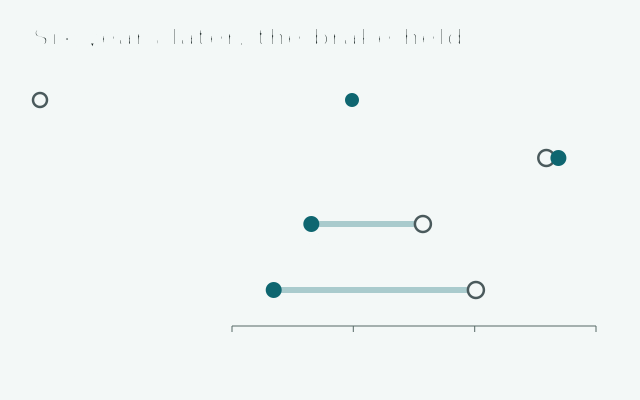
The brake was stronger in those who had managed to keep more weight off. The authors read this saving as the body’s response, in proportion to each person’s effort to keep their weight down.
With much smaller weight loss, the saving shrank as well. In a 2020 American study, also in the American Journal of Clinical Nutrition, women with overweight followed a very restricted diet until they reached a normal weight, losing far less than the reality show contestants, and were always measured after a few weeks at a stable weight. Right at the end of the weight loss, energy expenditure was about 54 kcal per day below predicted. At one and two years of follow-up, this difference had disappeared, and this small saving did not predict who regained weight. The authors concluded that, measured at a stable weight, metabolic adaptation is small and is not the main barrier to keeping the results.
People who try to lose weight with exercise run into a similar saving, because starting to train raises daily energy expenditure less than the workout math suggests. In an analysis published in 2026 in Current Biology, researchers Herman Pontzer and Eric Trexler pooled the studies in which people started training and had their daily energy expenditure measured before and after. With aerobic training, total expenditure rose much less than predicted, because the body cut energy from other tasks, partly from resting expenditure itself and during sleep. This compensation was larger when training came with a diet and smaller in the few groups that did strength training. Training is still worth it, and when it comes to keeping lost weight off, what usually matters more is hunger, which rises more than expenditure falls, as I showed in the post on the weight-loss plateau.
Can tea, coffee or chili pepper speed up your metabolism?
Green tea, coffee and chili pepper raise energy expenditure only a little. A 2011 review, with studies done in chambers that measure energy expenditure over 24 hours, showed that caffeine alone and caffeine combined with catechins, substances in green tea, raise total expenditure modestly and in proportion to the amount taken. When it comes to the scale, though, a 2012 Cochrane review, which pooled studies lasting a few months in adults with overweight and obesity, concluded that green tea preparations produce weight loss that is too small to make a difference and do not help keep lost weight off.
A 2012 review on capsaicin, the substance that makes chili peppers burn, found a rise in energy expenditure and slightly less hunger, also with a small effect, larger at high doses. Fat burners sold for weight loss usually combine caffeine with plant extracts that act as stimulants, such as synephrine from bitter orange, and what they promise goes far beyond what these ingredients deliver in studies. In people sensitive to caffeine, they can also speed up the heart and disrupt sleep.
| Claim | What the studies show | Does it help with weight loss? |
|---|---|---|
| Green tea and green tea capsules | slightly higher expenditure in the lab; weight loss too small in longer studies | almost nothing |
| Coffee, caffeine and fat burners | small rise in expenditure, in proportion to the dose | almost nothing, and it can worsen sleep |
| Chili pepper | slightly higher expenditure and slightly less hunger | a little |
| Eating every 3 hours (the 3-hour rule) | total expenditure does not change with the number of meals | no |
| Strength training | more muscle and slightly higher resting expenditure | yes, because it holds on to muscle and expenditure |
| Enough protein | digestion burns more and hunger goes down | yes, also through less hunger |
I already explained the 3-hour rule, eating every 3 hours to speed up metabolism, in the post on diet myths. The energy spent on digestion depends on how much you eat in a day, not on how many times you split up your food.
How to really speed up your metabolism
Few things speed up metabolism in a way that shows on the scale. Strength training, protein and movement increase energy expenditure, and sleep and a diet without drastic cuts protect muscle and keep hunger down, which helps maintain that expenditure over the months.
Strength training
Among types of training, strength training is the one that changes resting energy expenditure the most. A 2020 review in the Journal of Sports Sciences, which pooled studies with calorimetry before and after exercise programs, found an increase in resting energy expenditure with strength training and no clear change with aerobic training alone. The gain is modest, and the authors themselves warn that the studies were very different from one another and at risk of bias. It adds to the energy burned in the workout itself and to the muscle you preserve while dieting and as you age.
A kilo of muscle, on its own, does not burn the 100 calories a day that circulate online. Resting muscle burns much less than that, as I showed above, and the advantage of strength training shows up when you add together the muscle gained, the strength to move during the rest of the day and what you avoid losing when you lose weight.
Enough protein
Digestion also uses energy, and the amount changes with the type of food. A 2004 review on this thermic effect of food shows that protein takes much more energy to digest and store than carbohydrate, and that fat takes almost none. Protein is also more filling, which helps people who are hungry on a diet. If your food for the day falls short of the target, whey can make up the difference, as I explained in the post on how much whey to take per day.
Movement outside workouts and sleep
Everyday movement, such as walking, climbing stairs and standing, is the part of energy expenditure that varies most between people of the same size, as I described in how many calories the body burns at rest. Counting steps or building fixed walking habits helps keep this expenditure up even in busy weeks. Sleep also counts, because people who sleep little feel hungrier and lose more muscle and less fat on a diet, as I showed in short sleep makes it harder to lose fat.
A diet without drastic cuts
On the reality show, the weight loss was huge, with little food and intense exercise, and the energy saving was large and lasted for years. With smaller losses, it was small. The studies do not separate the effect of speed from the effect of the size of the loss, but eating a little less than you burn, without drastic cuts, together with protein and strength training, protects muscle, which is what holds up resting energy expenditure. In athletes, a long-term lack of energy has its own name and consequences that range from periods to bone, as I explained in the post on RED-S, energy deficiency in sport.
How to tell if your metabolism is slow
An online calculator cannot answer this question, because it only gives back the average for people similar to you. What measures it is indirect calorimetry: lying down and at rest, you breathe for a few minutes into a mask or under a hood, and the device calculates energy expenditure from the oxygen you take in and the carbon dioxide you breathe out. The test compares the measured value with the value predicted for your size and body composition, and this comparison shows whether your expenditure is below, within or above what is expected.
When measured expenditure is well below predicted, the next step is to look for the cause: thyroid, a very restrictive diet for a long time, sleep, medications and diseases that affect weight. When it is within the expected range, the focus moves to the plate, movement and muscle. That is the usual result. In the 1992 study I described in the calories post, adults who said they could not lose weight while eating little had a metabolism within the expected range, and in a 2023 Italian study of children and adolescents with obesity, most also had measured expenditure within or above predicted, with only a minority below.
Bioimpedance completes the assessment by showing how much of your body is muscle and how much is fat. I explained how to prepare for calorimetry and how bioimpedance works in other posts.
Symptoms that call for a medical assessment
Most people who complain of a slow metabolism do not have a disease. Some signs, however, call for a medical assessment, preferably with tests:
- tiredness that does not improve with rest, feeling colder than the people around you, dry skin and constipation that started for no reason;
- puffiness in the face and eyelids, hoarseness that does not go away or a lump in the neck;
- periods that have become irregular or stopped, especially in people who train a lot and eat little;
- weight gain without any change in food, routine or medication;
- a family history of thyroid disease, a recent birth or use of medications that cause weight gain, such as corticosteroids, insulin and some antidepressants and antipsychotics.
Never start thyroid hormone, a fat burner or a formula “to speed up metabolism” on your own. If you already take levothyroxine and think it is not working, talk to whoever prescribed it, with your test results in hand.
In practice
- Before blaming your metabolism, write down honestly what you eat for one or two weeks and count your daily steps.
- Do strength training two or three times a week and keep it up even when your goal is weight loss.
- Eat enough protein during the day, with a good source at your main meals, which also helps keep hunger down.
- Get enough sleep and move outside your workouts, with walks and the stairs instead of the elevator.
- Stay away from crash diets and eat only a little less than you burn, with protein and strength training, to protect your muscle.
- If there are signs of a thyroid problem or if your weight will not budge with everything adjusted, see a doctor and, if needed, have your energy expenditure measured with calorimetry.
Conclusion
Slow metabolism exists, but it plays a smaller part than people think in most people’s difficulty losing weight. Resting energy expenditure depends above all on lean mass, stays stable in adult life until around age 60, falls considerably in hypothyroidism and drops a little after a diet, much more after huge losses. Tea, coffee and chili pepper change this total very little. Strength training, protein and movement have a bigger effect on expenditure, sleep and a diet without drastic cuts protect muscle, and the thyroid deserves testing when signs appear.
All the best!
G
Responsible physician: Dr. Gilberto Nering Junior, sports medicine physician, CRM-SP 160822, RQE 142486 (Sports Medicine, Brazil).
This text was not sponsored, is for information only and does not replace an individual assessment. Questions about the content: contact the clinic.
Cover photo: Wil Stewart on Unsplash.
Frequently asked questions about slow metabolism
What are the symptoms of a slow metabolism?
The small difference in energy expenditure between people of the same size does not usually cause symptoms. When the cause is hypothyroidism, tiredness, feeling colder than normal, constipation, dry skin, puffiness and a few extra kilos appear, and a blood test with TSH and free T4 confirms or rules out the disease.
Does a slow metabolism make you gain or lose weight?
A slow metabolism makes it easier to gain weight and harder to lose it, but the difference between people of the same size is usually small. In a 1992 study of adults who said they could not lose weight while eating little, metabolism was within the expected range, and they ate more than they wrote down.
Do green tea or coffee speed up metabolism?
Green tea and coffee raise daily energy expenditure only a little. A Cochrane review of studies lasting a few months concluded that green tea produces weight loss too small to make a difference.
Does hypothyroidism slow down metabolism?
Hypothyroidism slows down metabolism and is the best known disease that does so. Treatment brings energy expenditure back to normal, but most of the weight gained in hypothyroidism is fluid, so fat loss with medication is usually small.
Does metabolism slow down after 40?
On average, metabolism does not slow down at 40. In a large international study, energy expenditure adjusted for body size stayed stable from age 20 to 60, in men and women, and only started to fall after that.
References
- Fontana L, Klein S, Holloszy JO, et al. Effect of long-term calorie restriction with adequate protein and micronutrients on thyroid hormones. J Clin Endocrinol Metab. 2006;91(8):3232-3235. doi:10.1210/jc.2006-0328
- Fothergill E, Guo J, Howard L, et al. Persistent metabolic adaptation 6 years after “The Biggest Loser” competition. Obesity (Silver Spring). 2016;24(8):1612-1619. doi:10.1002/oby.21538
- Hursel R, Viechtbauer W, Dulloo AG, et al. The effects of catechin rich teas and caffeine on energy expenditure and fat oxidation: a meta-analysis. Obes Rev. 2011;12(7):e573-e581. doi:10.1111/j.1467-789X.2011.00862.x
- Johnstone AM, Murison SD, Duncan JS, et al. Factors influencing variation in basal metabolic rate include fat-free mass, fat mass, age, and circulating thyroxine but not sex, circulating leptin, or triiodothyronine. Am J Clin Nutr. 2005;82(5):941-948. doi:10.1093/ajcn/82.5.941
- Jonklaas J, Bianco AC, Bauer AJ, et al. Guidelines for the treatment of hypothyroidism: prepared by the American Thyroid Association Task Force on Thyroid Hormone Replacement. Thyroid. 2014;24(12):1670-1751. doi:10.1089/thy.2014.0028
- Jurgens TM, Whelan AM, Killian L, et al. Green tea for weight loss and weight maintenance in overweight or obese adults. Cochrane Database Syst Rev. 2012;12(12):CD008650. doi:10.1002/14651858.CD008650.pub2
- Lichtman SW, Pisarska K, Berman ER, et al. Discrepancy between self-reported and actual caloric intake and exercise in obese subjects. N Engl J Med. 1992;327(27):1893-1898. doi:10.1056/NEJM199212313272701
- Ludy MJ, Moore GE, Mattes RD. The effects of capsaicin and capsiate on energy balance: critical review and meta-analyses of studies in humans. Chem Senses. 2012;37(2):103-121. doi:10.1093/chemse/bjr100
- MacKenzie-Shalders K, Kelly JT, So D, et al. The effect of exercise interventions on resting metabolic rate: a systematic review and meta-analysis. J Sports Sci. 2020;38(14):1635-1649. doi:10.1080/02640414.2020.1754716
- Martins C, Gower BA, Hill JO, et al. Metabolic adaptation is not a major barrier to weight-loss maintenance. Am J Clin Nutr. 2020;112(3):558-565. doi:10.1093/ajcn/nqaa086
- Pontzer H, Trexler ET. The evidence for constrained total energy expenditure in humans and other animals. Curr Biol. 2026;36(4):1013-1025.e4. doi:10.1016/j.cub.2026.01.025
- Pontzer H, Yamada Y, Sagayama H, et al. Daily energy expenditure through the human life course. Science. 2021;373(6556):808-812. doi:10.1126/science.abe5017
- Tamini S, Caroli D, Bondesan A, et al. Measured vs estimated resting energy expenditure in children and adolescents with obesity. Sci Rep. 2023;13(1):13178. doi:10.1038/s41598-023-40435-8
- Wang Z, Ying Z, Bosy-Westphal A, et al. Specific metabolic rates of major organs and tissues across adulthood: evaluation by mechanistic model of resting energy expenditure. Am J Clin Nutr. 2010;92(6):1369-1377. doi:10.3945/ajcn.2010.29885
- Westerterp KR. Diet induced thermogenesis. Nutr Metab (Lond). 2004;1(1):5. doi:10.1186/1743-7075-1-5