Also in: Português · Español · Italiano · 中文 · हिन्दी
Main points
- Giving your diet time helps take away sugar cravings. In weight-loss diets lasting a few months, followed by people with obesity, cravings went down, not up. Eating breakfast instead of skipping it kept cravings in check in a small study of young women, and in another, with women, a protein breakfast did better than a carbohydrate one. Sleeping well helps control hunger.
- No study has shown that nuts “switch off” sugar cravings. But in one study, swapping cookies for almonds made people eat about 150 fewer calories over the rest of the day.
- In the studies, eating nuts every day did not make weight go up. Part of their fat is not even absorbed.
- Liking sweet things is different from craving them. Eating fewer sweet foods for months did not change how much people liked that taste.
- There is no good evidence that sugar cravings come from a lack of some vitamin or mineral. In one study, capsules with the substances found in cocoa barely eased chocolate cravings.
It’s four in the afternoon, lunch was a long time ago, work has piled up and, all of a sudden, all you can think about is the chocolate in your desk drawer. To get rid of sugar cravings, many people have heard that the answer is to swap the sweet for a handful of nuts, and this has become almost a diet rule.
According to the studies, nuts are a better swap than cookies, but they don’t erase sugar cravings on their own. What helps more is eating breakfast, ideally with protein, not going many hours without food and planning sweets instead of banning them. Sleeping well helps control hunger, and on a weight-loss diet, cravings tend to ease as the months go by. In this post I show what the studies say about each point, whether nuts make you gain weight and whether cravings mean you lack some vitamin.
A sugar craving is not hunger
When you’re hungry, almost any food will do: a plate of rice and beans, a sandwich, a piece of fruit. Craving a specific food is selective: you want that sweet, and an egg sandwich won’t do.
This craving tends to show up at similar times and in similar situations: after lunch, mid-afternoon, at night on the couch, when the day has been rough or when you’ve gone many hours without eating. That’s why it has a lot to do with habit. The brain learns to link a moment of the day to a reward and starts asking for that reward at the same time. Feeling this craving, then, is not a lack of willpower. And because it is learned, it can also weaken, as the diet studies further down show.
Are sugar cravings a sign your body is missing something?
There is no good evidence that sugar cravings come from a lack of some vitamin, magnesium or protein, even though the idea gets passed around. In a classic experiment from the United States, people with frequent chocolate cravings were given, when the craving hit, a chocolate bar, white chocolate, capsules with the substances found in cocoa, empty capsules or nothing. Chocolate eased the craving, white chocolate, which has cocoa butter but no cocoa powder, eased it in part, and the cocoa capsules had almost no effect. This result points to taste, smell and texture as what calms the craving, not to some substance the body is missing.
So supplements are not a remedy for sugar cravings. In general, doctors replace vitamins and minerals when a test shows a deficiency, as I explained in the post about when to take vitamin D supplements. Eating early in the day instead of skipping the first meal, on the other hand, helped keep cravings in check in a small study of young women, and in another, with women, a higher-protein breakfast did better than a higher-carbohydrate one. I show both further down.
Liking sweet things is one thing, craving them is another
A common idea is that you can “retrain your palate”: if you stay away from sugar for a while, sweet things would lose their appeal. A Dutch study published in 2026 tested this idea.
The researchers split 180 adults into three groups for 6 months. One group ate few sweet-tasting foods, another ate a regular amount and the third ate a lot. Urine tests confirmed that the groups really did eat differently. In the end, there was no difference between the groups in how much people liked sweet things, nor in their choice of sweet foods, daily calories or weight. In the months after the study ended, participants went back to eating sweet things as before. They were healthy adults, most of them of normal weight. The sweet taste could come from sugar, sweeteners, fruit or dairy.
Going by the result, no longer liking sweet things is an unrealistic goal. You’ll probably go on liking chocolate. It makes more sense, then, to decide when sweets come in and in what amount.
Does dieting make sugar cravings worse?
Many people are afraid to start a diet because they think their sugar cravings will become unbearable, but the studies show the opposite. A 2017 review pooled studies of people with obesity who followed a lower-calorie diet for at least 12 weeks and who answered questionnaires about food cravings before and after. Cravings went down, and sugar cravings were the ones that fell the most, ahead of cravings for fast food, bread and pasta, and fatty foods.
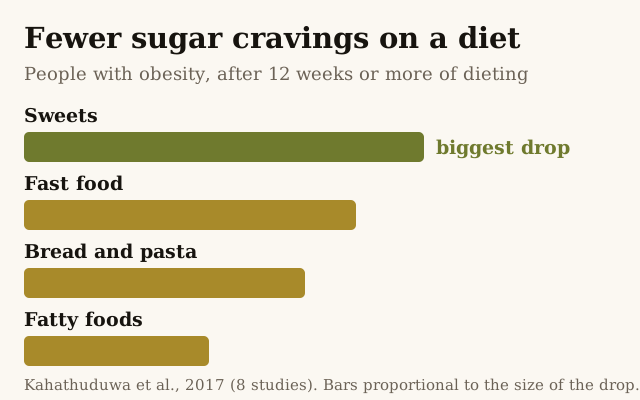
The authors explain this through habit: when you start eating less of a food, the brain gradually stops expecting it at that time and in that situation, and the craving weakens. These studies were done with planned, supervised diets, and the same cannot be said of a crash diet you can’t keep up. Anyone who has had binge eating or another eating disorder should only diet with professional follow-up. If your weight loss has stalled and your cravings only keep growing, I wrote about it in the post about the weight loss plateau.
Where nuts come in
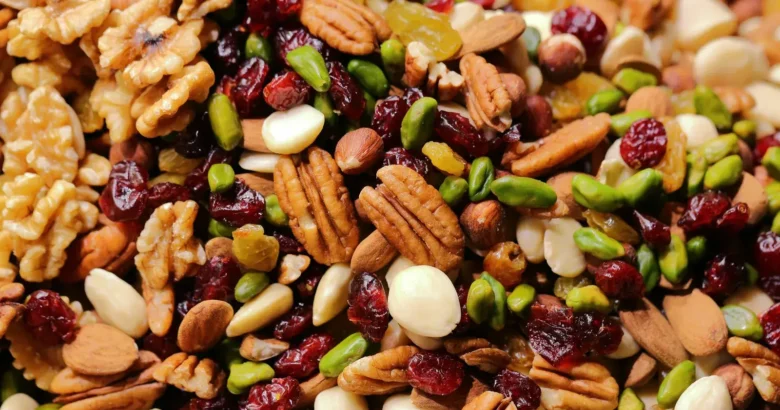
Nuts, also called tree nuts, include almonds, walnuts, cashews, Brazil nuts, pistachios, hazelnuts and macadamias. The peanut is a legume, a relative of beans, but it has a similar makeup and is included in several of these studies. All of them have plenty of fat, mostly the heart-healthy kind, plus protein and fiber. And they have to be chewed, which makes the snack slower than a cookie.
I didn’t find any study that directly measured whether this takes away sugar cravings. The studies that exist measure the effect of swapping one snack for the other.
In a study from New Zealand, 100 people ate, on different days, almonds or sweet cookies with the same calories. With the almonds, blood sugar rose much less. Hunger and lunch right afterward were similar, but over the rest of the day people ate, on average, about 150 fewer calories after the almonds.
Another study gave almonds or a carbohydrate-rich bar, with the same calories, to 140 adults with overweight or obesity. Some hormones linked to hunger responded better to the almonds, but the hunger people felt and how much they ate at the buffet right afterward were the same. Pooling 31 studies, a review found a small reduction in hunger with nuts.
There is also a curious study, with only 10 people, in which five days of eating walnuts reduced hunger and changed the brain’s response to photos of very appetizing foods, in a region linked to attention and control around food. It’s interesting, but it’s too few people to draw conclusions.
As a substitute for cookies, nuts do well: they disturb blood sugar less and reduce hunger a little. As a remedy for sugar cravings, though, the evidence is still missing.
Do nuts make you gain weight?
The question makes sense, because a handful of nuts has a lot of calories for its size. A 2021 review pooled 86 studies in which people started eating nuts and compared their weight with that of people who didn’t. Nuts did not make weight go up. In studies that followed hundreds of thousands of people for years, those who ate more nuts even had a slightly lower chance of becoming overweight.
Part of the explanation lies in the nut itself. The fat is trapped inside the cell walls of the seed, and part of it passes through the gut without being absorbed. So the body takes in fewer calories than the label says. This effect is greater with whole, raw nuts than with nut butter, nut flour or roasted nuts.
Quantity, however, still matters if you eat nuts every day. In studies with people who had overweight, nuts slightly increased calories for the day, which suggests that, in part, they were added to what people already ate instead of replacing something else. A 12-week study also found that people who ate the same snack every day, whether hazelnuts, chocolate or potato chips, got less “tired” of it, and the authors warn that this may lead to eating more.
How to use nuts against sugar cravings
So nuts work best in place of another snack and in a set portion. To put together this afternoon snack, follow four steps:
- Choose whole nuts, unsweetened and unsalted, because caramelized or chocolate-covered nuts are already a sweet.
- Put a handful in a small container instead of eating straight from the bag, which is where a handful turns into half a bag. A handful is enough: in the almond study, the portion was about 40 grams or a bit more.
- Have the nuts instead of the afternoon cookie or chocolate, rather than eating both.
- If you want something sweet, add a piece of fruit: a banana or an apple with nuts gives you the sweetness and the chewing in the same snack.
Peanut butter has the same nutrients as the whole peanut, but once ground, the fat becomes easier to absorb, and the spoonful goes over the measure without you noticing. Many brands also contain sugar. If you like it, choose one with only peanuts on the ingredient list and measure the portion.
Brazil nuts: two a day at most
One important exception is the Brazil nut. It is very rich in selenium: in one study, just two nuts a day raised blood selenium as much as a supplement. The amount of selenium also varies a lot from one nut to another. Too much selenium is harmful, and one of the first signs is hair loss. The European Food Safety Authority names people who eat Brazil nuts often as one of the few groups that may go over the safe limit. Stick to one or two a day and, if your handful is a mix, count the Brazil nuts in it.
People who are allergic to peanuts or to any nut should avoid that food and only try other kinds with guidance from an allergist. Itching in the mouth, swollen lips or shortness of breath after eating nuts is a reason to seek care right away.
Breakfast, protein and sleep
Sugar cravings may have to do with breakfast. In a study of 20 young women around 19 years old, with overweight or obesity, who usually skipped breakfast, both a normal-protein and a higher-protein breakfast reduced sugar cravings after the meal, compared with continuing to fast.
Another study, with 27 women, tested two breakfasts: one higher in protein and one higher in carbohydrate. After the protein breakfast, cravings for specific foods went down. After the higher-carbohydrate breakfast, they went up. The same study showed the weight of sleep: after a night with a third less sleep, the women felt hungrier and had a greater desire to eat in general, whatever the breakfast. Cravings for specific foods depended on the breakfast, not on sleep. On sleep, I wrote a whole post showing how short sleep gets in the way of fat loss.
These two studies give us four everyday habits. The first two start first thing in the morning:
- eat breakfast, if you usually skip that meal;
- put protein in it: eggs, plain yogurt, cheese or milk;
- avoid going many hours in a row without eating;
- look after your sleep, because sleeping badly increases hunger the next day.
Can you eat sweets without losing control?
Yes, as long as you decide beforehand when sweets come in. In the Dutch study, people who spent months eating few sweet things went back to their old intake as soon as the study ended, which suggests that cutting everything out is hard to keep up. This is why I prefer planning sweets to banning them: a dessert after weekend lunch, a piece of dark chocolate after dinner. In a set portion, this kind of sweet fits into a healthy diet.
In the end, weight responds to total calories over the day and the week. In the post about diet myths, I explain why calories still count.
When sugar cravings deserve attention
Most of the time, sugar cravings are a habit. But see a doctor if they come with:
- a lot of thirst, needing to urinate all the time or unexplained weight loss, which may point to diabetes;
- episodes in which you eat a large amount of food, feel you have lost control and then feel bad, which may point to binge eating;
- shakiness, cold sweats or weakness that get better when you eat, signs that may point to low blood sugar.
If you use insulin or another medication that lowers blood sugar and you feel shaky, have cold sweats or feel weak, this may be low blood sugar. Check your glucose if you can, have something with fast-acting sugar, such as half a glass of juice, and check again after 15 minutes, repeating if it’s still low. At that moment nuts won’t help, and chocolate isn’t the best choice either, because the fat in both makes blood sugar rise slowly.
If the person is confused or has passed out, don’t give anything by mouth and call for help. Afterward, tell your doctor.
How to curb sugar cravings: a summary
Nuts don’t erase sugar cravings, but they are a better swap than cookies and, in the right portion, they don’t make you gain weight. Sugar cravings also tend to ease over time during a weight-loss diet, even if your liking for sweet things stays. Protein early in the day, enough sleep and a planned sweet help with the rest.
| What you can do | What the studies showed |
|---|---|
| Swap the afternoon cookie for nuts | About 150 fewer calories over the rest of the day, in a study of 100 people |
| Give your weight-loss diet time | Over 12 weeks or more, sugar cravings fell the most |
| Eat breakfast, ideally with protein | In 20 young women, eating breakfast reduced sugar cravings compared with fasting; in 27 women, food cravings fell with more protein and rose with more carbohydrate |
| Get enough sleep | One night with a third less sleep increased hunger the next morning |
| Stay away from sweets to lose the habit | Six months of eating fewer sweets did not change the liking for sweet things |
One handful at a time, and enjoy your snack!
Responsible physician: Dr. Gilberto Nering Junior, sports medicine physician, CRM-SP 160822, RQE 142486 (Sports Medicine, Brazil).
This text was not sponsored, is for information only and does not replace an individual assessment. Questions about the content: contact the clinic.
Cover photo: Maksim Shutov on Unsplash.
Quick questions about sugar cravings and nuts
Do nuts take away sugar cravings?
No study has measured this directly so far. But swapping cookies for almonds made people eat less over the rest of the day, and nuts reduced hunger a little.
Does eating nuts every day make your weight go up?
In the studies, eating nuts every day did not increase weight. Part of their fat is not absorbed. The thing to watch is to have nuts in place of another snack, not on top of it.
How many nuts can I eat a day?
A handful a day is a good measure. Brazil nuts are the exception: because they are very rich in selenium, stick to one or two a day.
Can you lose your taste for sweets?
Your liking for sweet things will probably stay, even after months of eating fewer sweets. In one study, eating fewer sweet foods for 6 months did not change how much people liked sweet things. On weight-loss diets lasting a few months, though, sugar cravings tend to ease.
Are sugar cravings a sign of a vitamin deficiency?
The studies offer no good evidence of that. In an experiment with people who craved chocolate, capsules with the substances found in cocoa barely eased the craving, and white chocolate eased it in part, which points to taste and smell, not to a lack of some substance.
Do sugar cravings get worse during a diet?
In people with obesity, on planned diets of at least 12 weeks, sugar cravings went down, and they fell the most among the types of food.
References
- Akhlaghi M, Ghobadi S, Zare M, et al. Effect of nuts on energy intake, hunger, and fullness, a systematic review and meta-analysis of randomized clinical trials. Crit Rev Food Sci Nutr. 2020;60(1):84-93. doi:10.1080/10408398.2018.1514486
- Brown R, Ware L, Gray AR, et al. Snacking on Almonds Lowers Glycaemia and Energy Intake Compared to a Popular High-Carbohydrate Snack Food: An Acute Randomised Crossover Study. Int J Environ Res Public Health. 2021;18(20):10989. doi:10.3390/ijerph182010989
- Čad EM, Mars M, Pretorius L, et al. The Sweet Tooth Trial: A Parallel Randomized Controlled Trial Investigating the Effects of A 6-Month Low, Regular, or High Dietary Sweet Taste Exposure on Sweet Taste Liking, and Various Outcomes Related to Food Intake and Weight Status. Am J Clin Nutr. 2026;123(1):101073. doi:10.1016/j.ajcnut.2025.09.041
- Carter S, Hill AM, Buckley JD, et al. Acute feeding with almonds compared to a carbohydrate-based snack improves appetite-regulating hormones with no effect on self-reported appetite sensations: a randomised controlled trial. Eur J Nutr. 2023;62(2):857-866. doi:10.1007/s00394-022-03027-2
- EFSA Panel on Nutrition, Novel Foods and Food Allergens (NDA), Turck D, Bohn T, et al. Scientific opinion on the tolerable upper intake level for selenium. EFSA J. 2023;21(1):e07704. doi:10.2903/j.efsa.2023.7704
- Farr OM, Tuccinardi D, Upadhyay J, et al. Walnut consumption increases activation of the insula to highly desirable food cues: A randomized, double-blind, placebo-controlled, cross-over fMRI study. Diabetes Obes Metab. 2018;20(1):173-177. doi:10.1111/dom.13060
- Hoertel HA, Will MJ, Leidy HJ. A randomized crossover, pilot study examining the effects of a normal protein vs. high protein breakfast on food cravings and reward signals in overweight/obese “breakfast skipping”, late-adolescent girls. Nutr J. 2014;13:80. doi:10.1186/1475-2891-13-80
- Kahathuduwa CN, Binks M, Martin CK, et al. Extended calorie restriction suppresses overall and specific food cravings: a systematic review and a meta-analysis. Obes Rev. 2017;18(10):1122-1135. doi:10.1111/obr.12566
- Michener W, Rozin P. Pharmacological versus sensory factors in the satiation of chocolate craving. Physiol Behav. 1994;56(3):419-22. doi:10.1016/0031-9384(94)90283-6
- Nikodijevic CJ, Probst YC, Tan SY, et al. The Metabolizable Energy and Lipid Bioaccessibility of Tree Nuts and Peanuts: A Systematic Review with Narrative Synthesis of Human and In Vitro Studies. Adv Nutr. 2023;14(4):796-818. doi:10.1016/j.advnut.2023.03.006
- Nishi SK, Viguiliouk E, Blanco Mejia S, et al. Are fatty nuts a weighty concern? A systematic review and meta-analysis and dose-response meta-regression of prospective cohorts and randomized controlled trials. Obes Rev. 2021;22(11):e13330. doi:10.1111/obr.13330
- Tey SL, Brown RC, Gray AR, et al. Long-term consumption of high energy-dense snack foods on sensory-specific satiety and intake. Am J Clin Nutr. 2012;95(5):1038-47. doi:10.3945/ajcn.111.030882
- Thomson CD, Chisholm A, McLachlan SK, et al. Brazil nuts: an effective way to improve selenium status. Am J Clin Nutr. 2008;87(2):379-84. doi:10.1093/ajcn/87.2.379
- Yang CL, Tucker RM. Beneficial effects of a high protein breakfast on fullness disappear after a night of short sleep in nonobese, premenopausal women. Physiol Behav. 2021;229:113269. doi:10.1016/j.physbeh.2020.113269